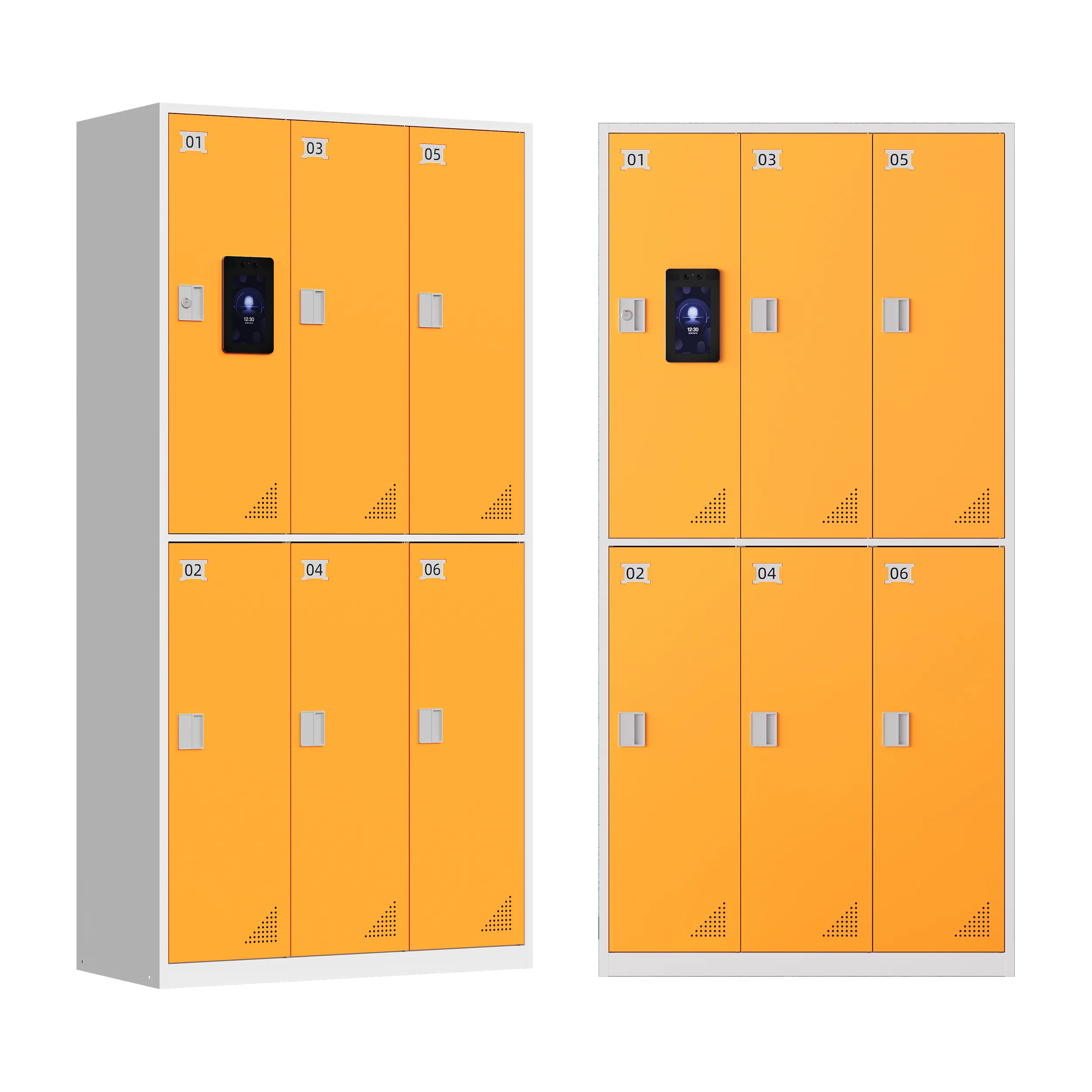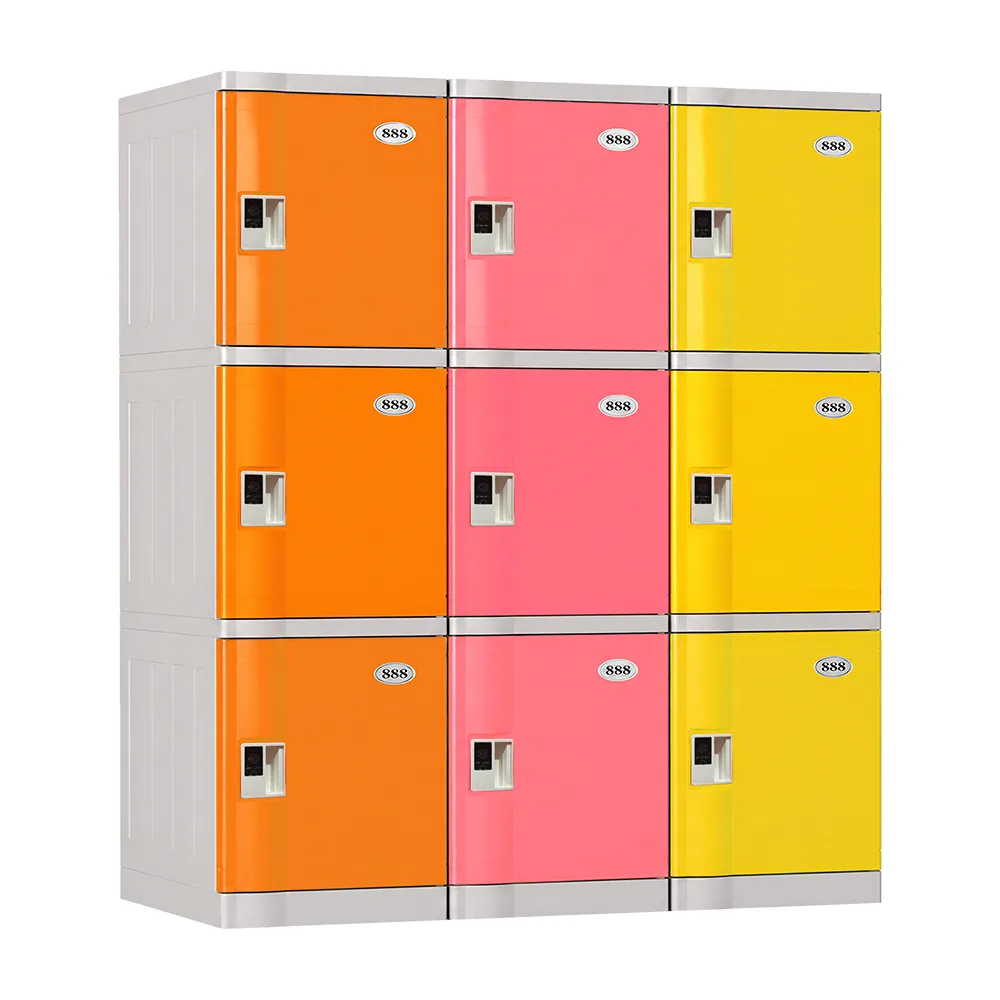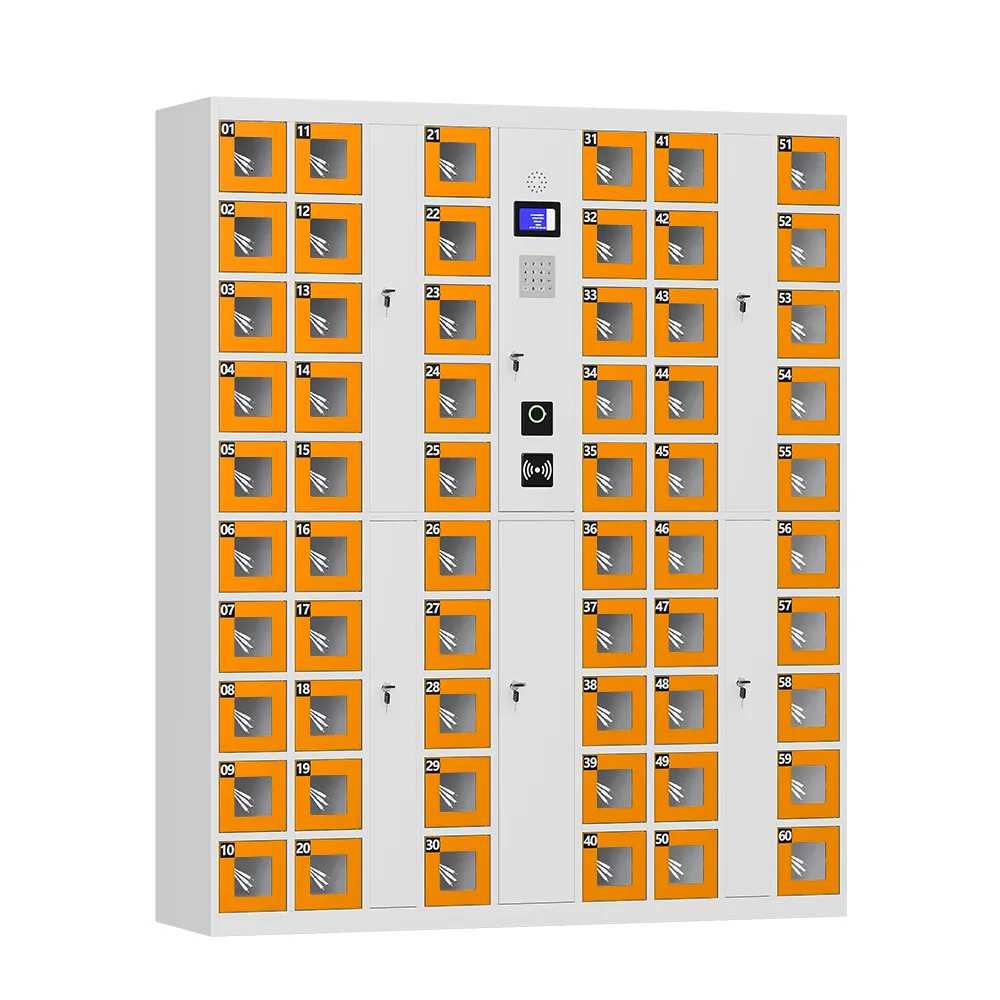

Why ABS Lockers Are Replacing Steel in High-Traffic and Wet Environments
For decades, steel was the default material for lockers in gyms, schools, pools, and factories. It is strong, familiar, and cheap at the point of purchase. But steel has a fundamental weakness in humid and high-traffic environments: it rusts. Rust stains clothing, corrodes hinges, requires periodic repainting, and eventually creates compartments that cannot be closed or cleaned properly. Over a ten-year lifecycle, a steel locker bank often costs more in maintenance, repainting, and replacement than the original capital saving ever justified.
ABS (Acrylonitrile Butadiene Styrene) engineering plastic solves this problem at the source. ABS lockers are inherently waterproof, corrosion-proof, impact-resistant, and hygienic. They do not rust, do not need repainting, and do not transfer stains or odours to users’ belongings. For fitness centres, swimming pools, saunas, schools, industrial changing rooms, and any facility with high humidity or heavy daily use, ABS is no longer an alternative material — it is the better specification.
This guide is written for facility managers, architects, project contractors, and procurement teams who need to specify, customise, and procure ABS locker systems. It covers the material advantages, the six application sectors where ABS consistently outperforms steel, the common locker-room problems that a well-designed system solves, the customisation options available, and the quality and implementation factors that separate a durable installation from a disposable one. At UFUN, we manufacture and install ABS and smart locker systems across 50+ countries, and the recommendations below are drawn from that field experience.
The Five Core Advantages of ABS Lockers Over Steel
Before comparing suppliers or configurations, it is worth understanding why ABS is the right material for the job. Each advantage below addresses a specific failure mode of traditional steel lockers.
1. Waterproof and Corrosion-Proof by Nature
ABS is a non-porous engineering plastic that does not absorb moisture and cannot oxidise. Unlike steel, which requires a painted or powder-coated surface to resist rust — a surface that chips, scratches, and fails over time — ABS is waterproof throughout its entire cross-section. A scratch on an ABS locker is still waterproof; a scratch on a steel locker is the starting point of a rust stain that will spread for the rest of the locker’s life. This makes ABS the only sensible choice for swimming pools, saunas, shower areas, and coastal facilities where salt air accelerates steel corrosion.
2. Impact-Resistant and Built for Heavy Use
ABS has high impact strength and flexural recovery, meaning it absorbs blows without denting or cracking. A steel locker dents permanently when kicked or struck by a heavy bag; an ABS locker flexes and returns to shape. Reinforced door frames and hinge areas further extend service life in high-traffic environments such as school corridors, factory changing rooms, and 24/7 gyms where lockers are used dozens of times per day.
3. Hygienic and Easy to Clean
ABS has a smooth, non-porous surface that resists bacteria, mould, and odour absorption. It can be wiped down with standard disinfectants without damaging the finish, and it does not harbour rust particles or paint flakes that can contaminate clothing or equipment. For healthcare facilities, schools, food-processing plants, and any environment where hygiene is a compliance requirement, ABS is easier to keep clean than steel, wood, or laminate.
4. Zero Maintenance — No Repainting, No Rust Treatment
A steel locker bank typically requires inspection, rust treatment, and repainting every 3–5 years, and full replacement after 10–15 years in a humid environment. An ABS locker bank requires none of this. There is no paint to chip, no surface to rust, no hinges to lubricate against corrosion, and no ongoing maintenance budget. Over a 15–20 year service life, the total cost of ownership of an ABS locker is significantly lower than steel, even when the upfront price is higher.
5. Vibrant Colours and Brand Customisation
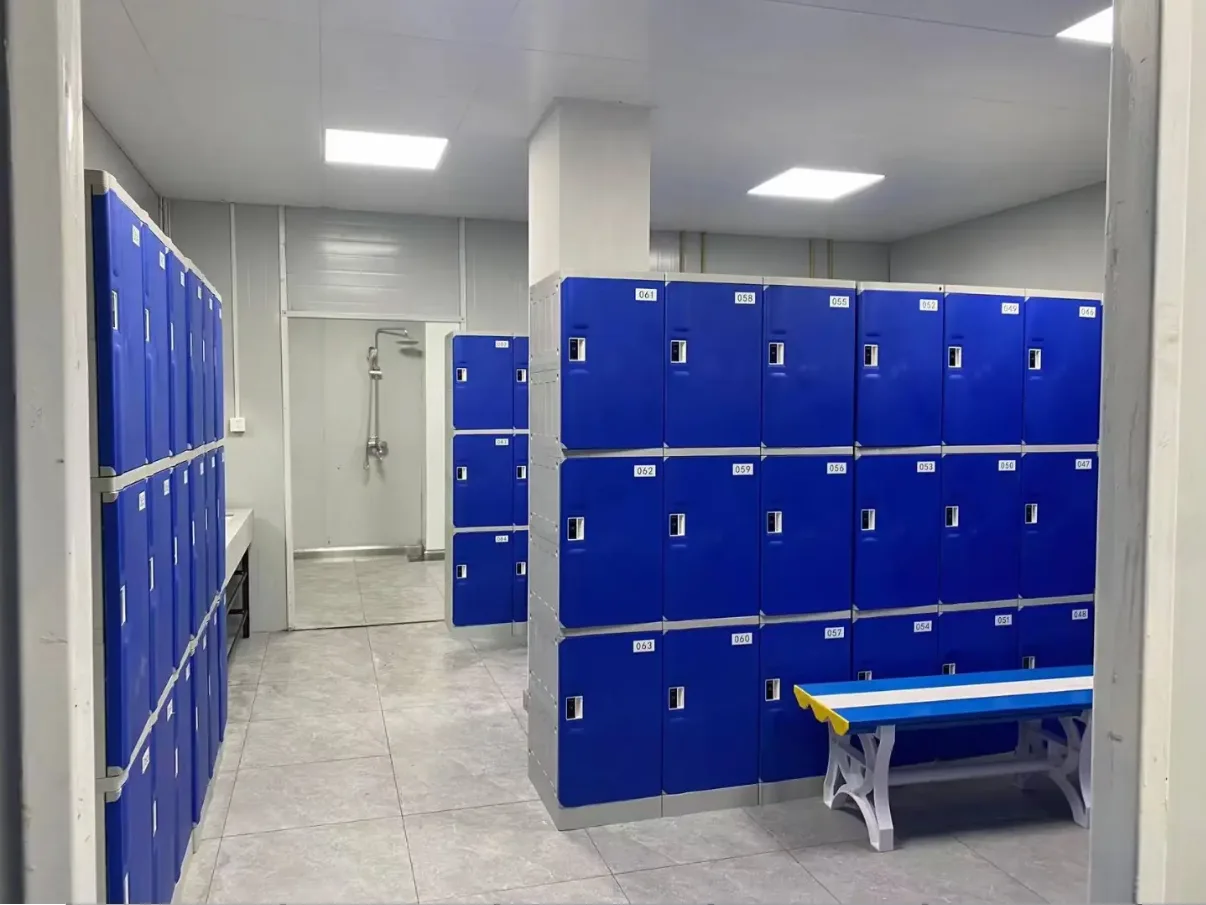
ABS lockers are available in a wide range of standard colours — including blue, orange, green, red, grey, yellow, and white — and can be colour-matched to a brand identity or interior design scheme. Unlike painted steel, the colour is integral to the material, so it will not fade or peel with UV exposure or cleaning. This makes ABS lockers a design feature rather than an industrial afterthought, and it allows architects and brand managers to create visually distinct changing rooms that reinforce the facility’s identity.
Six Application Sectors Where ABS Lockers Deliver the Most Value
ABS lockers are not a one-size-fits-all product. Each sector has different demands for durability, humidity, access control, layout, and aesthetics. Below is a breakdown of the six sectors where ABS consistently delivers the strongest return on investment, along with the specific requirements each sector imposes.
1. Fitness Centres, Gyms, and Yoga Studios
Gyms and fitness studios are the highest-volume application for ABS lockers. Members arrive with bags, towels, shoes, and valuables, and they expect a clean, secure place to store them while they train. ABS lockers resist the sweat, humidity, and constant use that destroy steel lockers in a gym environment, and the range of colours allows the locker bank to match the gym’s brand. For 24/7 gyms, electronic or RFID locks enable unattended access and eliminate the need for staff to manage keys. Yoga and boutique studios benefit from the quiet operation and clean aesthetic of ABS, which fits a wellness-oriented environment better than industrial steel.
2. Swimming Pools, Leisure Centres, and Water Parks
This is the sector where ABS has the clearest advantage over steel. Poolside changing rooms are continuously humid, often chlorinated, and subject to splashing — conditions that will rust a steel locker within months. ABS lockers are completely unaffected by water, chlorine, and humidity, and they do not transfer rust stains to wet swimwear. For water parks and leisure centres with high child traffic, the impact resistance and rounded edges of ABS lockers also reduce injury risk. Specify waterproof electronic locks and ensure the locker base is raised slightly above floor level for drainage.
3. Schools, Universities, and Educational Facilities
Schools and universities need lockers that survive thousands of students per day, year after year. ABS lockers resist the kicks, impacts, and heavy bags that dent steel, and they do not require the summer maintenance programme that steel lockers demand. The wide colour range supports house systems, year-group colour coding, or school branding. For secondary schools and universities, RFID or electronic locks reduce key-management overhead and enable audit trails if needed. Primary schools benefit from the low height options and easy-to-clean surfaces.
4. Offices and Modern Workspaces
As offices move toward hot-desking, activity-based working, and secure building access, personal storage is becoming a design element rather than a back-of-house utility. ABS lockers in corporate colours provide clean, quiet, low-maintenance storage for employees’ bags, laptops, and personal items, and they can be configured with digital locks integrated with the building access system. For co-working spaces and flexible offices, the modular design allows locker banks to be reconfigured as the workforce grows or changes.
5. Industrial and Commercial Facilities
Factories, warehouses, distribution centres, and manufacturing plants need heavy-duty lockers for employees’ personal items, workwear, and PPE (personal protective equipment). ABS lockers withstand the dust, dirt, and occasional impacts of an industrial environment, and they are easy to wipe clean at the end of a shift. For facilities with wet processes — food processing, pharmaceuticals, cleaning operations — the waterproof and hygienic properties of ABS are essential. Heavy-duty reinforced models are available for the most demanding environments, and flame-retardant ABS grades can be specified where fire safety regulations require it.
6. Healthcare, Spas, and Wellness Centres
Hospitals, clinics, spas, and wellness centres require lockers that are hygienic, easy to clean, and resistant to moisture and cleaning chemicals. ABS lockers meet all three requirements, and the non-porous surface does not harbour bacteria or absorb odours. For spas and wellness centres, the colour range and clean aesthetic support a calm, premium environment. For healthcare staff changing rooms, the durability and low maintenance reduce the facilities team’s workload. Where infection control is critical, antimicrobial ABS additives can be specified.
Common Locker-Room Problems and How a Well-Designed ABS System Solves Them
Most locker-room complaints fall into four categories. A properly specified ABS locker system addresses all four at the design stage, rather than requiring ongoing workarounds.
| Problem | Impact | ABS Solution |
| Rust and moisture damage | Stained clothing, corroded hinges, compartments that cannot close, ongoing repainting cost. | ABS is inherently waterproof and corrosion-proof. No rust, no repainting, no surface treatment required over the locker’s lifetime. |
| Lockers failing under heavy use | Dented doors, broken hinges, damaged locks, premature replacement. | Reinforced ABS structure with high impact strength. Doors flex and recover instead of denting. Heavy-duty hinge and lock options for high-traffic sites. |
| Poor layout causing congestion | Queues at peak times, blocked aisles, inaccessible compartments, safety hazards. | Layout design based on actual user flow — compartment sizes, door swing direction, aisle widths, and placement optimised for the specific space. Modular systems adapt to irregular rooms. |
| Difficult daily management | Lost keys, staff time spent on lockouts, no visibility into usage, no audit trail. | Electronic, RFID, PIN, or QR access eliminates physical keys. Smart management software provides remote monitoring, usage reports, and audit trails. Admin overrides are logged. |
The key principle is this: a locker room should not be a pain point for facilities staff or users. By specifying the right material, the right lock system, and the right layout at the procurement stage, most of these problems are engineered out before the first locker is installed.
Customisation Options: Building a Locker System Around Your Project
Every facility operates differently, and a locker system should adapt to the space, the users, and the operational workflow — not the other way around. A professional ABS locker manufacturer should offer customisation across the following dimensions.
Compartment Sizes and Configurations
Lockers are available in a range of compartment heights and widths, from full-height single-tier lockers for coats and long items, to two-tier, three-tier, four-tier, and even six-tier configurations for high-density storage. The width and depth can also be varied to fit the available space. A good supplier will provide a layout drawing based on your room dimensions and user count, recommending the compartment mix that maximises capacity without creating congestion.
Lock Systems
ABS lockers can be fitted with a range of lock types depending on the security and management requirements:
- Key lock — simplest and lowest cost, but requires key management and is prone to lost keys. Suitable for low-security, low-turnover environments.
- Digital / electronic lock — PIN code access, with admin override and audit logging. Suitable for gyms, offices, and schools.
- RFID card or wristband — contactless, fast, and integrates with existing building access credentials. Suitable for 24/7 gyms, offices, and leisure centres.
- QR code — ideal for visitor and short-term use, with one-time codes sent by SMS or email. Suitable for public storage and paid locker applications.
- Smart networked lock — all of the above, connected to a cloud management platform for remote monitoring, reporting, and central administration.
Colours, Finishes, and Branding
Standard colours typically include blue, orange, green, red, grey, yellow, white, and black. Custom colour matching is available for larger orders, allowing the locker bank to match a brand identity or interior design scheme. Logo printing, numbering, and signage can be integrated into the locker doors. For premium environments, textured or matte finishes are available.
Layout and Space Optimisation
A locker system is more than a row of cabinets. The layout must account for user flow, door swing direction, aisle clearance, accessibility (including wheelchair-accessible lower compartments), ventilation, and sightlines for security. A supplier that offers layout design as part of the quotation will identify issues — such as doors opening into walkways or compartments that cannot be reached — before manufacture, when changes are cheap, rather than after installation, when they are expensive.
Accessories and Add-Ons
Depending on the application, the following accessories may be specified:
- Bench seating between locker banks for changing areas
- Coat hooks and umbrella stands
- Sloping tops to prevent items being left on top of lockers (and to aid cleaning)
- Integrated USB or wireless charging for phone lockers
- Advertising or information display screens for public-facing locker banks
- Waterproof base plinths for poolside and wet-area installations
ABS vs. Steel Lockers: A Side-by-Side Comparison
The choice between ABS and steel is not always obvious at the quotation stage, because steel often has a lower upfront price. The comparison below covers the full lifecycle factors that should drive the decision.
| Factor | ABS Lockers | Steel Lockers |
| Water / corrosion resistance | Excellent — inherently waterproof, cannot rust | Poor — requires surface coating; rusts when coating is damaged |
| Impact resistance | High — flexes and recovers, does not dent | Low — dents permanently under impact |
| Hygiene | Excellent — non-porous, easy to disinfect, no rust particles | Moderate — porous paint, rust flakes, can harbour bacteria |
| Maintenance | Zero — no repainting, no rust treatment | High — inspection, rust treatment, repainting every 3–5 years |
| Colour options | Wide range, colour integral to material, does not fade | Limited to paint colours, fades and chips over time |
| Weight | Lightweight — easier to install and relocate | Heavy — requires more installation labour, harder to reconfigure |
| Noise | Quiet — doors close with a soft sound | Noisy — metal doors clang, echo in changing rooms |
| Upfront cost | Moderate to high | Low to moderate |
| 10-year total cost | Lower — no maintenance, longer service life | Higher — maintenance, repainting, earlier replacement |
| Typical service life | 15–20+ years | 8–15 years (shorter in humid environments) |
| Best for | Pools, saunas, gyms, schools, wet areas, high-traffic sites | Dry, low-traffic, low-budget environments |
As a general rule, if the locker will be installed in a humid, wet, or high-traffic environment — or if the total cost of ownership over 10+ years is the decision criterion — ABS is the better specification. If the locker is for a dry, low-use storage area with a very tight capital budget, steel may be acceptable.
Quality and Manufacturing: What to Verify Before You Buy
Not all ABS lockers are built to the same standard. The material grade, the manufacturing process, and the quality control system all affect the durability and consistency of the finished product. When evaluating suppliers, verify the following.
Material Grade
ABS is available in different grades, and the grade affects impact strength, heat resistance, and UV stability. Ensure the supplier uses virgin ABS (not recycled filler) for locker components, and that the material meets relevant standards for impact strength (typically measured in Izod or Charpy impact tests). For outdoor or UV-exposed installations, specify UV-stabilised ABS to prevent brittleness and colour fading over time. For high-fire-risk environments, ask about flame-retardant ABS grades (such as ABS V0) and request the relevant test certificates.
Manufacturing Process
ABS locker components are typically injection-moulded. The quality of the mould, the injection parameters, and the cooling process all affect the dimensional accuracy and structural consistency of the parts. A well-controlled manufacturing process produces lockers with consistent door fit, smooth surfaces, and strong hinge points. Ask the supplier about their mould maintenance schedule, their process control (SPC) practices, and whether they can provide dimensional inspection reports.
Quality Control and Certification
A reliable manufacturer will operate a quality management system certified to ISO 9001, and will conduct incoming material inspection, in-process inspection, and final product testing. For ABS lockers, key tests include:
- Impact resistance test — door and body impact at specified temperatures
- Load test — compartment shelf and door load capacity
- Lock cycle test — repeated opening and closing to verify lock and hinge durability
- Waterproof test — verification of water ingress resistance for wet-area models
- Flame retardancy test — where specified, verification of fire rating
Request copies of test reports and certification before placing an order. A supplier that cannot provide evidence of testing is asking you to trust their marketing rather than their quality system.
Production Capacity and Lead Time
For large projects — schools, leisure centres, industrial facilities — the supplier’s production capacity and lead time are critical. Confirm the monthly production capacity, the standard lead time for a typical order, and the lead time for custom colours or configurations. A supplier with stable production processes and adequate capacity will provide reliable delivery dates and will not cut corners on quality to meet a rushed deadline.
Proven Performance in Real Projects
ABS lockers are not a showroom product — they are installed and tested in real, demanding environments every day. Below are three representative project types that demonstrate how ABS performs in practice.
Industrial Facility — Southeast Asia
A large coal processing facility in Indonesia required over 1,000 employee lockers for a site with high dust, humidity, and strict fire-safety requirements. Standard steel lockers would have corroded within two years in that environment. The solution was a custom ABS locker system using flame-retardant ABS material, configured in multi-tier compartments with digital locks and a central management system. The lockers have been in continuous operation since installation, with zero corrosion-related maintenance and no compartment failures.
Aquatic Centre — Singapore
A public swimming pool in Singapore needed waterproof lockers for a poolside changing room operating at near-100% humidity year-round. Previous steel lockers had to be replaced after four years due to severe rust. The ABS replacement lockers were installed with waterproof electronic locks and raised waterproof plinths. After several years of operation, the lockers show no signs of corrosion, maintain their original colour, and require only routine wiping for cleaning.
Educational Campus — Shanghai
A secondary school in Shanghai required a durable, safe, and easy-to-maintain locker system for over 2,000 students. The project specified ABS lockers in house colours, with RFID locks integrated with the school’s existing student card system. The impact-resistant construction has withstood daily student use, the colour-coded layout supports the school’s house system, and the facilities team reports zero maintenance time spent on rust treatment or repainting — a significant saving compared with the previous steel locker installation.
Implementation and Installation: Getting It Right on Site
Even the best-specified locker system can underperform if it is installed poorly. The following steps should be agreed with the supplier before delivery.
Pre-Installation Site Survey
The supplier should conduct a site survey covering: room dimensions and layout, floor level and floor loading, power supply for electronic locks, network connectivity for smart systems, environmental conditions (humidity, temperature, water exposure), and access for delivery and installation. Any site preparation required by the buyer — power outlets, data points, floor levelling, drainage — should be identified and completed before the lockers arrive, not discovered on installation day.
Installation and Commissioning
ABS lockers are lighter than steel, which makes installation faster and less labour-intensive. However, the installation must still be level, plumb, and securely anchored to the wall or floor to prevent tipping. For electronic or smart lockers, commissioning includes connecting to power and network, configuring user access, testing every lock and compartment, and training the on-site administrator. A formal commissioning checklist — with every compartment tested and signed off — should be completed before handover.
Training and Handover
The supplier should provide administrator training covering: daily operation, user management, lock override procedures, basic troubleshooting, software dashboard navigation (for smart systems), and maintenance schedules. End-user materials — quick-start guides, on-locker instructions, multilingual signage — should be provided for high-traffic public locations. A well-trained administrator and clear user instructions reduce support calls and extend the life of the system.
After-Sales Support and Spare Parts
Confirm the after-sales support scope: response time for technical queries, availability of spare parts (locks, hinges, doors, electronic components), on-site service options, and the warranty period. A supplier that holds common spare parts in stock and provides a clear escalation procedure will minimise downtime if a component fails. For multi-site or large projects, a service-level agreement (SLA) with defined response times is worth negotiating.
Frequently Asked Questions
Are ABS lockers as strong as steel lockers?
ABS lockers are not as rigid as steel, but they are more impact-resistant in the ways that matter for locker use. Steel dents permanently when struck; ABS flexes and recovers. For the loads and impacts encountered in gyms, schools, and changing rooms, reinforced ABS lockers are more durable in practice than steel, because they do not accumulate permanent damage. Heavy-duty ABS models with reinforced frames are available for the most demanding industrial environments.
Can ABS lockers be used outdoors?
Standard ABS lockers are designed for indoor or sheltered use. For outdoor or fully exposed installations, specify UV-stabilised ABS and a weatherproof canopy or enclosure. Direct prolonged UV exposure can cause brittleness over time in non-stabilised material. For outdoor applications, also confirm that the lock and electronic components have an appropriate IP rating for water and dust ingress.
How do you clean and maintain ABS lockers?
ABS lockers require almost no maintenance. Clean with a soft cloth and a mild detergent or disinfectant — avoid abrasive scouring pads and harsh solvents (such as acetone) that can damage the surface. There is no need for wax, polish, rust treatment, or repainting. Inspect locks and hinges periodically, and wipe down surfaces as part of the regular cleaning routine.
Can ABS lockers be recycled?
Yes, ABS is a recyclable thermoplastic. At the end of its service life, ABS lockers can be shredded and reprocessed into new plastic products. This makes ABS a more sustainable end-of-life option than painted steel, which requires paint removal and special handling for recycling. Some manufacturers offer take-back or recycling programmes for old locker banks.
Are ABS lockers fire-safe?
Standard ABS is combustible, as are most plastics. For environments where fire safety is a concern — such as industrial facilities, public buildings, or corridors serving as escape routes — specify flame-retardant ABS grades (typically rated UL94 V0 or equivalent) and verify that the installation complies with local fire regulations. Always request the flame-retardancy test certificate from the supplier before specifying for a high-fire-risk location.
How long do ABS lockers last?
In a typical indoor gym or school environment, ABS lockers have a service life of 15–20 years or more, with no corrosion-related degradation. In wet or poolside environments, where steel lockers may fail in 4–8 years, ABS lockers can last 15+ years with no rust or corrosion. The actual service life depends on usage intensity, maintenance, and whether the correct grade of ABS was specified for the environment.
Can existing steel lockers be replaced with ABS without modifying the room?
In most cases, yes. ABS lockers are available in standard dimensions that match common steel locker footprints, so they can often be installed in the same space without structural modification. However, it is always advisable to have the supplier conduct a site survey and provide a layout drawing, because the optimal compartment configuration and layout may differ from the existing steel installation.
What is the typical lead time for a custom ABS locker order?
Standard-colour, standard-configuration orders typically ship in 3–5 weeks from order confirmation. Custom colours, special lock systems, or large projects may require 6–10 weeks, depending on the supplier’s production schedule and the complexity of the customisation. Always confirm the lead time in writing and build it into the project schedule, particularly for projects with a fixed opening date.
Conclusion: Specify the Right Material, and the Locker Room Stops Being a Problem
ABS lockers have moved from an alternative product to the preferred specification for gyms, pools, schools, and industrial facilities — and for good reason. They solve the four problems that have plagued steel locker rooms for decades: rust, impact damage, poor layout, and difficult management. They do this with zero ongoing maintenance, a wide range of colours and configurations, and a lower total cost of ownership over the service life of the installation.
The key to a successful ABS locker project is not just choosing ABS over steel — it is specifying the right compartment configuration, the right lock system, the right layout, and the right quality of manufacturer. Use the comparison table, the customisation checklist, and the quality-verification questions in this guide to evaluate suppliers on evidence rather than claims.
If you are planning an ABS locker project and would like a free layout assessment, a technical specification sheet, or a custom quotation, contact the UFUN team. We manufacture ABS and smart locker systems for fitness, education, leisure, industrial, and commercial applications, with factory-direct pricing, OEM/ODM customisation, and global shipping support. We are happy to provide a site layout, a sample unit, and a detailed project proposal — whether or not you ultimately choose us as your supplier.
📩 Request a free ABS locker layout assessment and custom quotation → contact UFUN Smart Lockers today.