
1. Introduction: The Cold Takeout Problem Nobody Talks About
You have probably experienced it yourself. You place a lunch order through a delivery app, the tracker shows the rider is three minutes away, and then an unexpected interruption happens — a meeting overruns, a phone call runs long, or you get pulled into a quick conversation with a colleague. By the time you finally make it to the lobby or front door, your meal has been sitting out for twenty minutes. The fries are soggy, the soup is lukewarm, and the entire dining experience is ruined.
This is not a rare inconvenience. It is a daily friction point that affects millions of people in every major city. Delivery riders cannot wait indefinitely for customers to answer the door. Customers cannot always drop everything the moment food arrives. And property managers are caught in the middle, dealing with piles of takeout bags cluttering reception desks, delivery personnel wandering through restricted areas, and an endless stream of “my food went missing” complaints.
Smart food delivery lockers have emerged as the practical solution to this three-way problem. By providing a secure, temperature-controlled, self-service pickup point, these locker systems ensure that meals arrive in excellent condition regardless of when the customer collects them — while simultaneously reducing lobby clutter, improving building security, and cutting down on delivery-related complaints. This guide covers everything property managers, facility operators, and restaurant owners need to know about choosing and deploying a food delivery locker system.
2. What Exactly Is a Smart Food Delivery Locker?
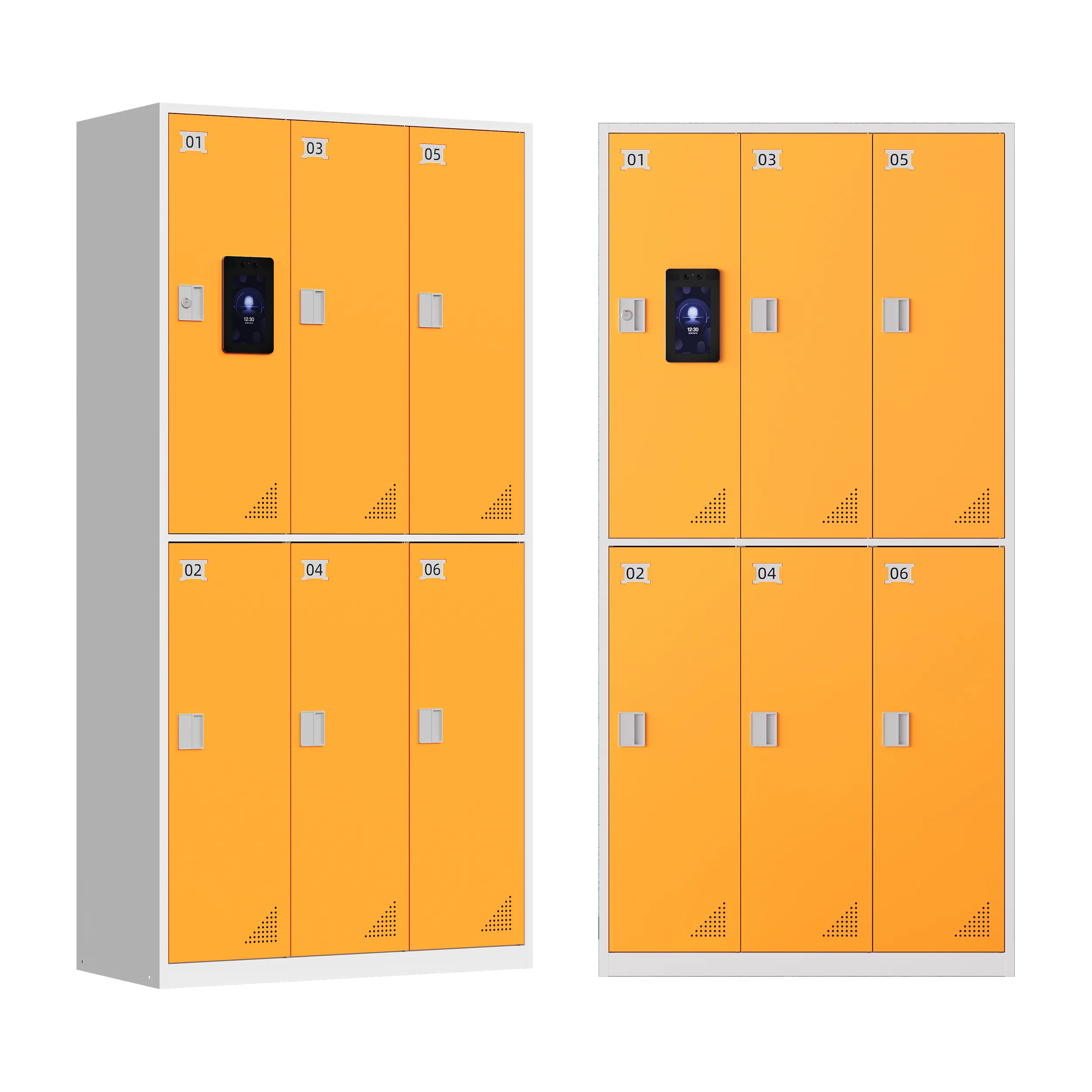
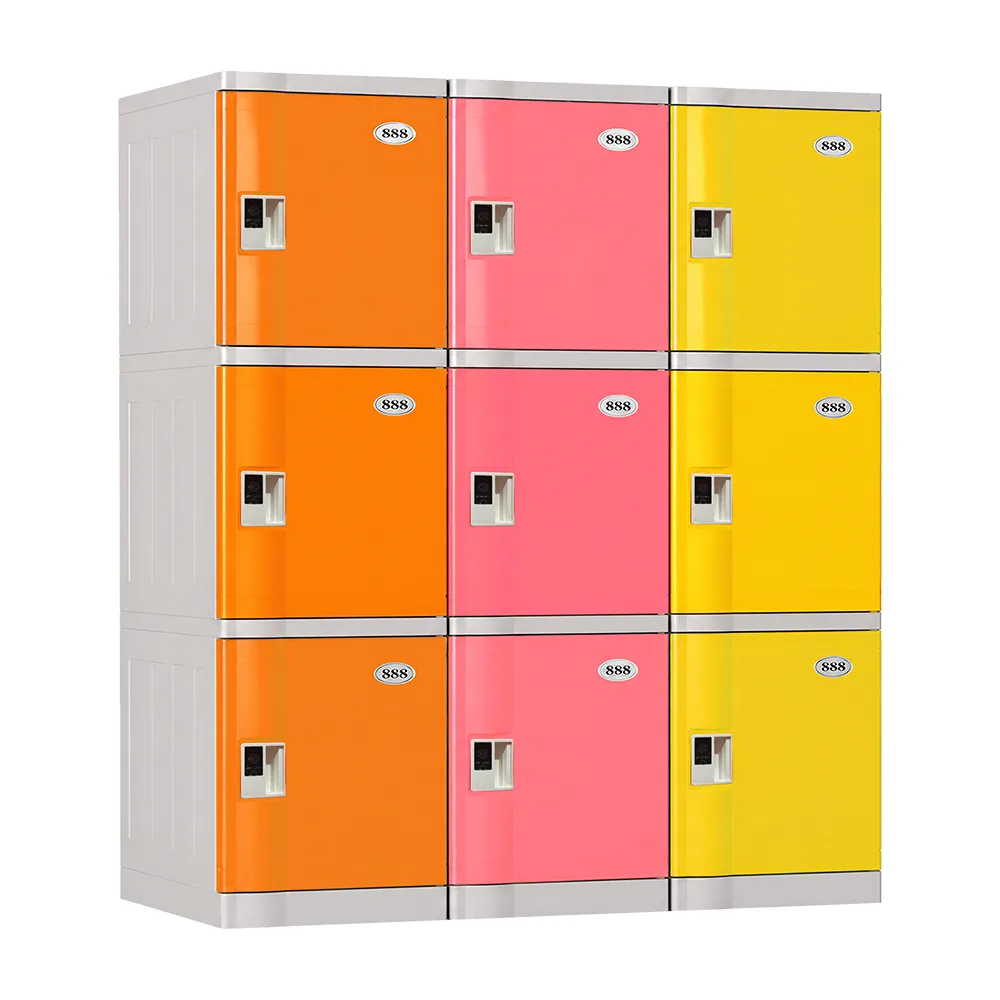
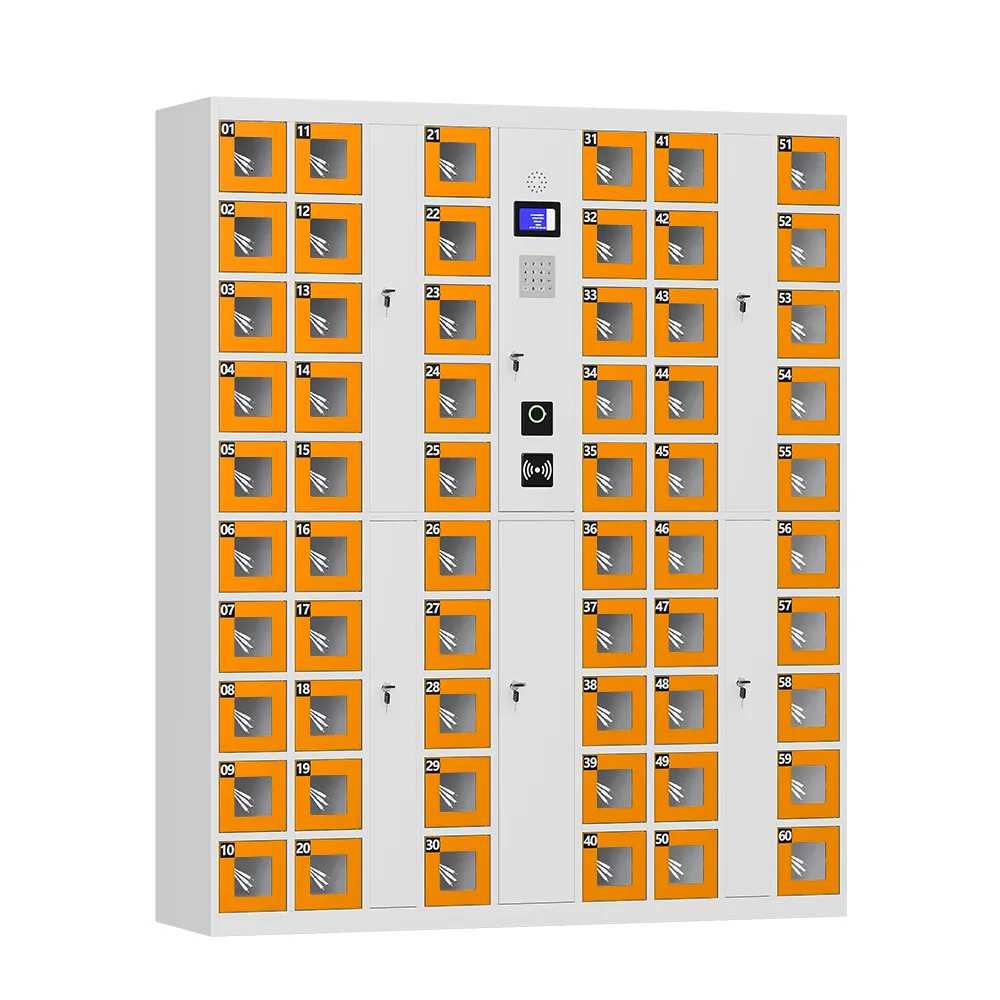
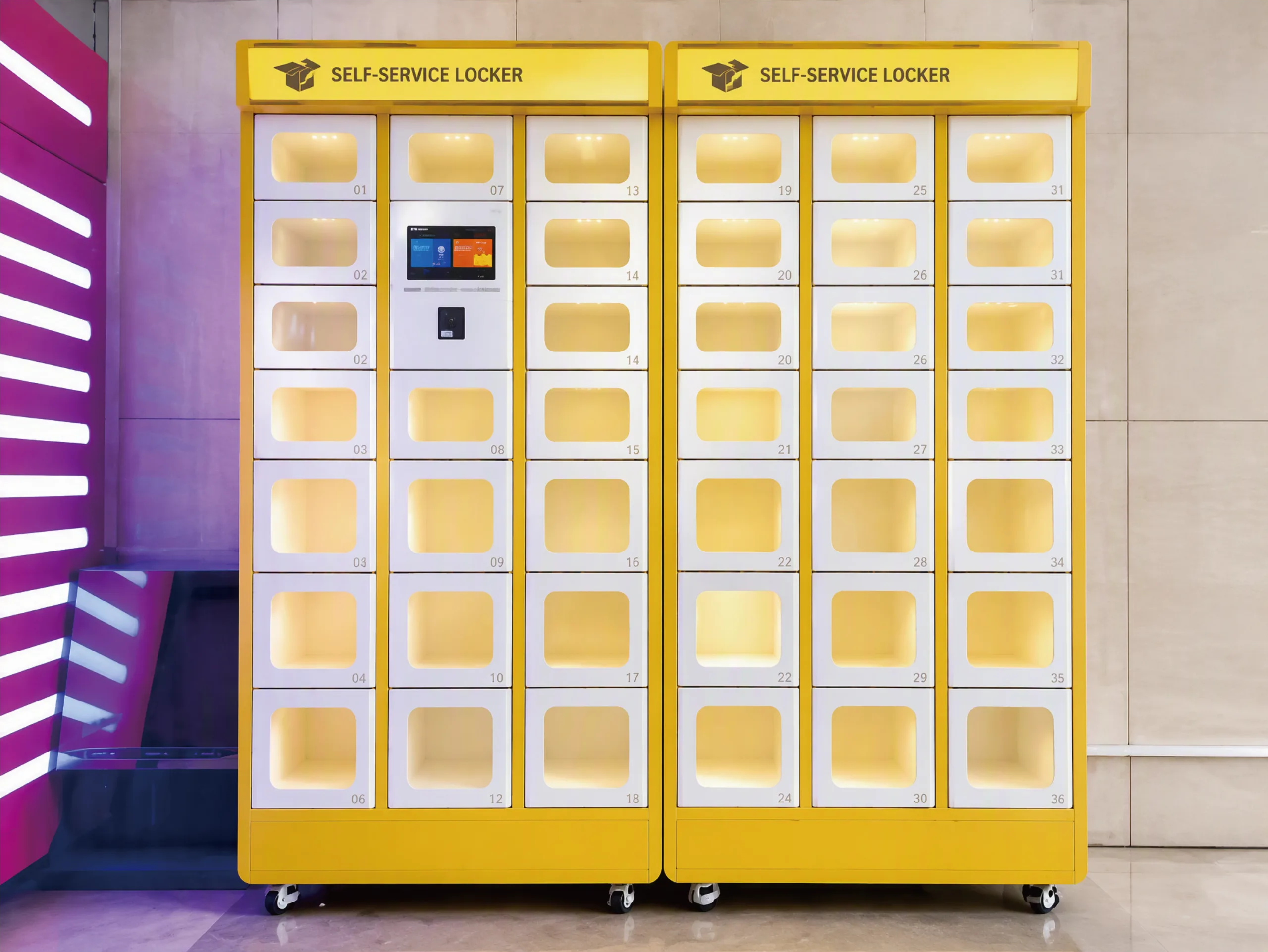
At its core, a smart food delivery locker is a multi-compartment cabinet designed specifically for the temporary storage of prepared meals. Each compartment is independently locked and insulated, and the entire system is managed by an electronic control unit with a touchscreen interface. Unlike a standard parcel locker, a food delivery locker is engineered with food safety in mind — the interior materials are food-grade, the compartments are easy to sanitize, and many models include active temperature control.
The system operates on a simple deposit-and-retrieve cycle:
- A delivery rider arrives at the locker, authenticates via the touchscreen, and places the meal into an available compartment.
- The door closes and locks automatically. The system logs the deposit time, compartment number, and order details.
- The customer receives an instant notification (SMS, app push, or email) containing a unique pickup code or QR code.
- The customer arrives at their convenience, enters the code or scans the QR, and the corresponding compartment unlocks.
- The system logs the pickup time and marks the compartment as available for the next delivery.
The entire process is contactless, requires no building staff intervention, and operates 24 hours a day. The customer never needs to coordinate a meeting time with the rider, and the rider never needs to wait for someone to answer the door — both parties save time, and the food stays protected in a secure, insulated compartment.
3. How the Pickup Process Works: Step by Step
Step 1: Rider Deposit
The delivery rider approaches the locker touchscreen and selects “Deposit Order.” Depending on the system configuration, the rider may scan a QR code from their delivery app, enter a order number, or simply tap “Start” to open an available compartment. The system assigns a compartment based on meal size — a compact compartment for a single sandwich order, a larger one for a family meal or multiple beverage cups. The rider places the food inside, closes the door, and the compartment locks with an audible confirmation.
Step 2: Instant Notification
Within seconds of the door closing, the system sends a pickup notification to the customer. The message includes the locker location, a unique access code or QR code, and simple pickup instructions. Some systems also send a notification to the restaurant or delivery platform confirming successful delivery, eliminating the “did it actually get dropped off?” ambiguity that plagues manual handoffs.
Step 3: Customer Retrieval
When the customer is ready, they walk to the locker and enter their code on the keypad or scan the QR code from their phone. The system verifies the code, identifies the matching compartment, and unlocks that specific door. The customer retrieves their meal, closes the door, and the compartment is immediately marked as available. The entire interaction takes approximately 15 seconds — no app download, no account creation, no staff assistance required.
Step 4: System Reset and Logging
After pickup, the system records the complete transaction — deposit time, pickup time, compartment used, rider identification, and customer verification. This creates an auditable trail for every meal that passes through the locker, which is invaluable for resolving disputes, analyzing usage patterns, and optimizing compartment allocation.
4. Where Food Delivery Lockers Deliver the Most Value
4.1 Office Buildings and Corporate Campuses
Office buildings are the single highest-demand location for food delivery lockers, and the reasons are straightforward. A mid-sized office tower with 500 employees may see 100-200 lunch deliveries on a typical workday. Without a locker system, these deliveries create several operational headaches:
- Reception desks become improvised food storage areas, with bags and drinks piled on every available surface.
- Delivery riders enter restricted areas searching for specific offices, creating security and liability concerns.
- Meals go cold while employees finish meetings or calls, leading to dissatisfaction and wasted food.
- Misplaced or stolen orders generate complaints that consume property management time.
A locker bank in the lobby, near elevator banks, or in a dedicated pickup zone solves all of these problems. Employees receive an SMS when their food arrives and collect it on their own schedule — no rush, no cold meals, no lobby clutter. For corporate campuses with multiple buildings, a network of lockers managed from a single software platform ensures consistent service across the entire property.
4.2 Apartment Complexes and Residential Communities
Residential buildings are the second-largest market for food delivery lockers. The dynamics are slightly different from offices — deliveries are concentrated around dinner hours rather than lunch — but the pain points are similar. Residents order dinner but may not be home when the rider arrives, or they may not want to buzz a stranger into the building. Gated communities and high-security apartment buildings face an additional challenge: delivery riders often cannot access the property at all, forcing residents to meet them at the gate or skip delivery entirely.
A food locker near the building entrance, ideally co-located with parcel lockers, creates a convenient 24/7 pickup point that works for both residents and delivery personnel. For property managers, it reduces foot traffic through the lobby, eliminates the need for staff to accept and store food deliveries, and becomes a valued amenity that supports resident retention and positive reviews.
4.3 Hospitals and Healthcare Facilities
Hospitals and clinics represent a fast-growing market for food delivery lockers, driven by two distinct user groups. First, healthcare staff — doctors, nurses, and administrators — work long, irregular shifts and often cannot step away from their duties to meet a delivery rider. A locker near a staff entrance or break area lets them order meals and pick them up during a brief break without leaving the facility. Second, visitors and family members who spend hours waiting for patients appreciate being able to order food and collect it without leaving the building, especially in hospitals with limited on-site dining options or restricted visiting hours.
In healthcare settings, the hygiene and sanitation features of a food locker are particularly important. Look for systems with stainless steel interiors, antimicrobial coatings, and easy-to-wipe surfaces that can be cleaned between uses. Some facilities also use lockers in pharmacy or laboratory areas for secure, temperature-controlled handoff of sensitive materials.
4.4 University Campuses and Student Housing
University students are among the heaviest users of food delivery services, but campus security policies often prevent delivery riders from entering dormitory areas or academic buildings. This creates a frustrating gap — students order food, the rider arrives at the campus perimeter, and the two must coordinate a meeting point that may be a ten-minute walk from the student dorm. A food locker at the main campus entrance, student center, or dormitory lobby eliminates this friction entirely.
Beyond convenience, food lockers help universities maintain campus security by reducing the number of unauthorized delivery personnel entering residential areas. They also reduce food waste — a significant concern on campuses where uneaten meals are frequently discarded because they went cold or were forgotten. For institutions with large international student populations, multi-language touchscreen support ensures that all students can use the system regardless of language proficiency.
4.5 Additional High-Volume Locations
- Shopping malls and retail centers — shoppers can order food from mall restaurants and pick it up without waiting in line.
- Transportation hubs — airports, train stations, and bus terminals where travelers want a hot meal but cannot leave the gate area.
- Co-working spaces and shared offices — members order lunch and pick it up on their own schedule.
- Manufacturing facilities and industrial parks — workers on factory floors cannot leave the line during meal delivery windows.
- Hotels and hospitality venues — guests can order from local restaurants and pick up in the lobby without involving front desk staff.
5. Key Features to Evaluate Before Buying
Not all food delivery lockers are created equal. The difference between a system that becomes indispensable and one that sits underused often comes down to specific engineering and software choices. Here are the critical features to evaluate:
| Feature | Why It Matters | What to Look For |
| Insulation Quality | The primary purpose is temperature retention. Poor insulation means cold food and unhappy customers. | Thick foam insulation, sealed door gaskets, independent compartment insulation |
| Active Heating | Keeps hot food at serving temperature for extended periods. | Consistent 45-60°C (113-140°F) range, individual compartment control, energy-efficient PTC heating |
| Active Cooling (Optional) | Essential for salads, sushi, cold beverages, and desserts. | Refrigerated compartments maintaining 2-8°C, separate from heated zones |
| Interior Materials | Food safety and easy cleaning are non-negotiable. | Food-grade stainless steel, antimicrobial coating, seamless surfaces with no crevices |
| User Interface | Riders need speed; customers need simplicity. | Large responsive touchscreen, fast QR scanner, multi-language support, audio feedback |
| Remote Management | Property managers need visibility without physical checks. | Cloud dashboard, real-time status, usage analytics, automated maintenance alerts |
| Segurança | Users must trust that their food is protected. | Anti-pry locks, tamper sensors, individual compartment locking, optional integrated camera |
| Conectividade | The system must stay online to send notifications. | WiFi + LAN + optional 4G/LTE cellular backup for reliable connectivity |
6. Heating vs. Cooling: Matching Compartment Technology to Your Menu Mix
One of the most important configuration decisions is whether to install heated compartments, cooled compartments, or a combination of both. The right choice depends on the food delivery patterns at your specific location.
Heated Compartments
Heated compartments use PTC (Positive Temperature Coefficient) heating elements to maintain a consistent warm temperature, typically between 45°C and 60°C (113°F to 140°F). This temperature range keeps hot food — pizza, burgers, stir-fry, soups, coffee — at serving quality for 30-60 minutes without overcooking or drying it out. Heated compartments are the standard choice for office buildings and lunch-heavy locations where the majority of orders are hot meals.
Cooled Compartments
Cooled compartments use compact refrigeration units to maintain temperatures between 2°C and 8°C (36°F to 46°F). These are essential for locations that receive a high volume of salads, sushi, sashimi, cold sandwiches, fresh fruit, beverages, or dessert orders. Cooled compartments are also valuable in hot climates where even short periods at room temperature can compromise food safety.
Dual-Zone Configurations
Many modern systems offer dual-zone locker banks — a mix of heated and cooled compartments in the same cabinet. This is the most versatile configuration for locations with diverse delivery patterns, such as apartment buildings (where dinner orders may include both hot meals and cold beverages) or university campuses (where students order everything from bubble tea to fried rice). The system automatically assigns the appropriate compartment based on order type, or the rider can manually select the desired temperature zone during deposit.
7. Why Property Managers Are Installing Food Delivery Lockers
For property managers and facility operators, the decision to install a food delivery locker is rarely about a single benefit — it is about the cumulative impact on operations, tenant satisfaction, and cost efficiency. Here is what operators consistently report after deployment:
- Reduced lobby clutter — Reception and lobby areas stay clean and professional — no more stacks of takeout bags on the front desk.
- Improved security — Delivery riders no longer wander through restricted areas or need to be escorted, improving building security and reducing liability.
- Fewer complaints — The system eliminates “my food was stolen” and “the rider left my order in the wrong place” complaints, because every transaction is digitally logged.
- Staff efficiency — Front desk staff spend less time managing food deliveries and more time on higher-value tasks.
- Tenant satisfaction — Tenants and employees rate the locker as one of the most appreciated building amenities, directly supporting retention and positive reviews.
- Competitive advantage — In competitive rental markets, a food delivery locker becomes a differentiating amenity that helps attract and retain quality tenants.
8. ROI and Operational Benefits: Quantifying the Value
While the exact return on investment depends on location, delivery volume, and locker configuration, the operational savings and tenant satisfaction gains are typically substantial. Consider a mid-sized office building with 500 employees and approximately 150 daily food deliveries:
| Metric | Without Locker | With Locker | Impact |
| Daily lobby food deliveries | 150 bags piled at reception | 150 meals in secure compartments | Clean, professional lobby |
| Staff time per day managing food | 60-90 minutes | 5-10 minutes (remote monitoring) | ~80 minutes saved daily |
| Food-related complaints per month | 8-12 (lost/cold/misplaced) | 0-2 (system-logged, traceable) | ~80% reduction |
| Average food temperature at pickup | Often cold (15-30 min wait) | Hot (heated compartment) | Improved meal quality |
| Delivery rider building access | Frequent, unrestricted | Lobby-only, self-service | Enhanced security |
| Tenant satisfaction score | Baseline | +15-25% (amenity value) | Higher retention rates |
For residential buildings, the ROI story is similar but framed around resident retention. In markets where tenants have many rental options, a food delivery locker — especially one paired with a parcel locker — becomes a tangible convenience that residents specifically mention in lease renewal decisions. The cost of installing a locker system is typically a fraction of the cost of tenant turnover (which includes vacancy loss, marketing, and refurbishment).
9. Frequently Asked Questions
Q: How long can food stay in a heated locker before it goes cold?
A: A well-insulated heated compartment maintains food at serving temperature (45-60°C / 113-140°F) for 30-60 minutes, depending on the initial food temperature and compartment insulation quality. Most customers pick up within 15-30 minutes, so food is typically still hot at retrieval. For longer holding periods, some systems offer adjustable temperature settings and extended-heat modes.
Q: Do customers need to download an app to pick up their food?
A: No. The best food delivery lockers use SMS or email notifications with a simple pickup code or QR code. Customers simply walk to the locker, enter the code or scan the QR on the touchscreen, and retrieve their meal. No app download, account creation, or staff assistance is required — this zero-friction pickup model is critical for high adoption rates.
Q: How do you clean and maintain a food delivery locker?
A: Quality systems are designed for easy maintenance. Food-grade stainless steel interiors wipe clean with standard sanitizing solution, and seamless surfaces prevent food particles and odors from becoming trapped. Most operators perform a quick daily wipe-down and a deeper weekly cleaning. The system also provides automated maintenance alerts — filter changes, temperature calibration, and door seal checks — so issues are addressed before they affect users.
Q: Can the locker handle both hot and cold food?
A: Yes, with a dual-zone configuration. The locker bank includes both heated compartments (for hot meals) and cooled compartments (for salads, sushi, beverages, and desserts). The system can automatically assign the appropriate zone based on order type, or the rider can manually select the desired temperature during deposit. This is the most versatile configuration for locations with diverse delivery patterns.
Q: What happens if a customer does not pick up their food?
A: The system can be configured with automated escalation logic. If a meal remains unclaimed beyond a set threshold (typically 2-4 hours), the system sends a reminder notification to the customer and alerts the property manager. For food safety, most facilities set a maximum holding time (e.g., 4 hours for hot food) after which the compartment is flagged for cleaning and the meal is disposed of per local food safety regulations. The system logs all actions for accountability.
Q: How many compartments do I need for my building?
A: As a rough guideline, plan for approximately 1 compartment per 20-30 daily food deliveries during peak hours, accounting for the fact that most meals are picked up within 15-30 minutes. A building with 150 daily deliveries typically needs 12-20 compartments. It is always better to start with a slightly larger configuration and scale down usage than to install too few compartments and face peak-hour overflow. Modular systems allow additional locker banks to be added later as delivery volume grows.
Q: Can the food locker integrate with our existing building management system?
A: Yes, if the system offers an open API. This allows the locker to connect with property management platforms, access control systems, and building automation dashboards. For multi-site property portfolios, API integration enables centralized monitoring and reporting across all locker installations, which is essential for efficient facility management at scale.
10. Conclusion: A Small Upgrade with a Measurable Impact
Food delivery lockers are not a complicated technology. They are essentially insulated, secure compartments with smart electronic locks and a cloud-based management system. But that straightforward combination solves a problem that affects millions of people every day — cold, misplaced, or stolen takeout meals — while simultaneously improving building operations, reducing staff workload, and enhancing tenant satisfaction.
The global food delivery market continues to grow year over year, showing no signs of slowing down. As delivery volume increases, the friction points associated with manual food handoffs — lobby clutter, security concerns, cold meals, customer complaints — will only become more pronounced. A smart food delivery locker system is one of those rare facility upgrades that pays for itself not through direct revenue, but through the cumulative value of time saved, complaints avoided, and tenant loyalty earned.
If you manage an office building, apartment complex, hospital, university campus, or any facility with significant food delivery traffic, the question is no longer whether a food locker would be useful. It is whether you want to keep dealing with the daily friction of manual food handoffs — or solve it once with a system that works reliably, 24 hours a day, with minimal ongoing effort.