
Physical keys remain the most prevalent access control tool for commercial, industrial, and institutional facilities worldwide. Yet despite their widespread use, traditional key management practices are notoriously unstructured and poorly monitored. For most businesses, misplaced keys for offices, server rooms, company vehicles, and restricted zones can go undetected for weeks, largely due to outdated manual logbooks and unsupervised basic key storage boxes.
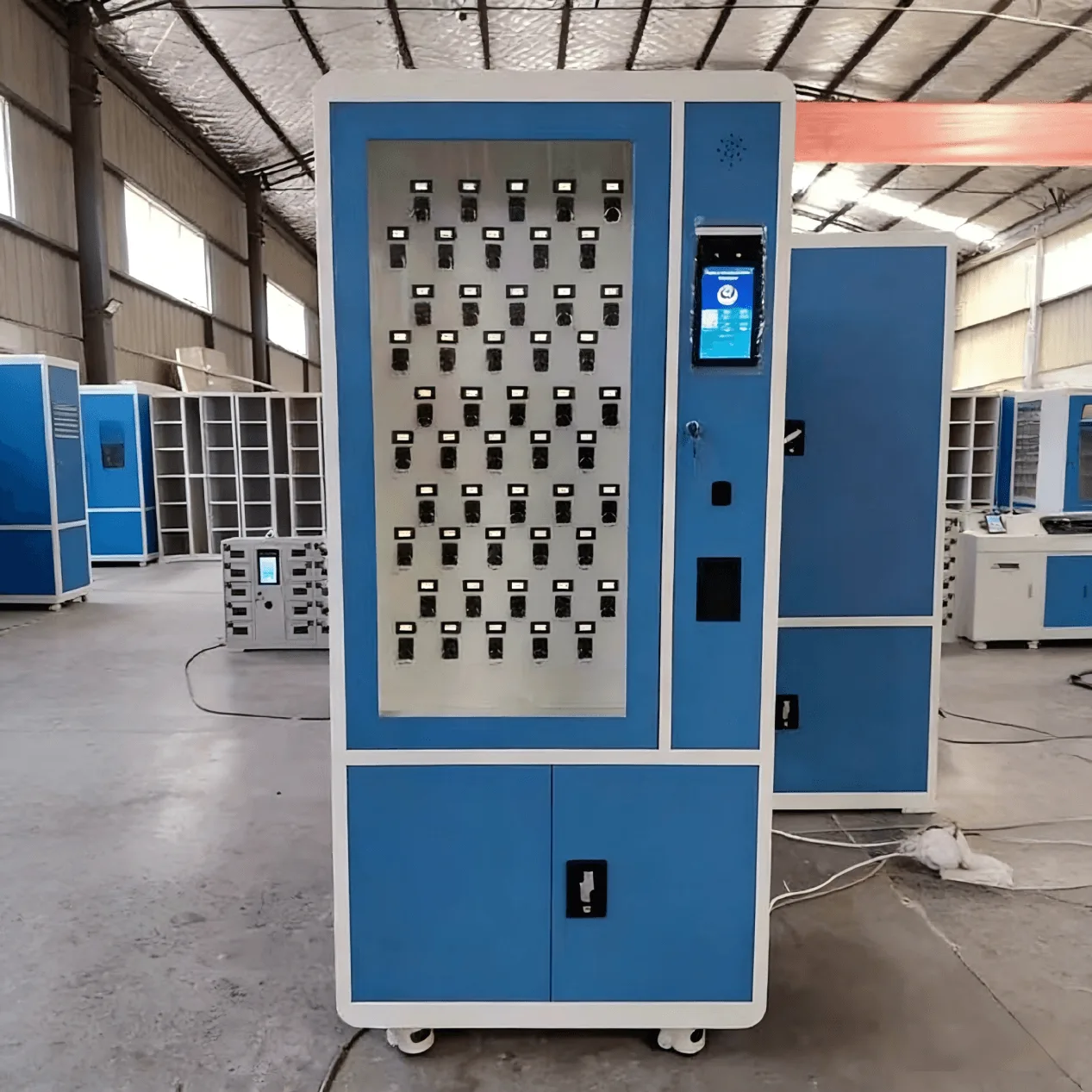
Smart key management cabinets—also known as intelligent key control systems, electronic key lockers, or RFID key management cabinets—are purpose-built to resolve the critical loopholes in conventional key administration. For security supervisors and facility managers looking to upgrade their access control infrastructure, understanding the full technical functionality of these smart systems is essential before making a procurement decision. This guide comprehensively explains the working principles, core technologies, security advantages, industry use cases, and key selection criteria of modern smart key management solutions.
Core Pain Points Solved by Smart Key Management Cabinets
Legacy key management workflows rely on two unreliable methods, both of which carry significant security and operational risks. The first is manual paper logging, which fully depends on staff self-reporting and personal integrity, leaving massive room for human error, omission, and unrecorded key usage. The second is basic single-lock key cabinets, where anyone with master access can retrieve any key stored inside, with no individualized access restrictions or usage records.
Neither traditional method can generate accurate, traceable audit records. When keys are lost, misused by unauthorized personnel, or returned past the deadline, facility teams have no way to track down the exact cause or responsible party. Smart key management cabinets completely overhaul this outdated workflow. By adopting independent sensor-equipped key slots, multi-layer user verification, and automatic digital data recording, these systems transform passive, honor-based key management into an active, permission-driven access control solution with fully verifiable records for every key withdrawal and return action.
Core Technical Components of Modern Smart Key Management Systems
The superior performance of intelligent key cabinets stems from an integrated set of hardware and software technologies. Every functional module is designed to deliver precise tracking, strict access control, and automated management, covering the entire lifecycle of physical key usage.
1.Flexible Multi-Factor User Authentication
Unlike conventional cabinets that use shared fixed passcodes or single mechanical keys, modern smart key systems support diverse verification methods to fit varying security levels. Common authentication options include PIN code input, RFID card swiping, fingerprint scanning, and facial recognition. Facility administrators can customize access rules flexibly: single-factor authentication for low-risk daily-use keys to improve operational efficiency, and combined two-factor or multi-factor verification for high-security keys used for server rooms, vaults, and restricted areas, effectively blocking unauthorized access attempts.
2.High-Precision Sensor Key Slots
Every key hook and storage slot inside the smart cabinet is equipped with a dedicated high-sensitivity sensor. These sensors work 24/7 to monitor the real-time status of each key, accurately identifying whether a key is in place or has been removed. This hardware foundation enables real-time key inventory tracking, allowing the system to pinpoint the exact status of every individual key slot at any moment without manual inspection.
3.Unique RFID Key Identification Tagging
All managed keys are fitted with exclusive RFID electronic tags with independent identification codes. Even when multiple keys have identical appearances, the system can accurately distinguish each individual key. This technology eliminates the vague “key removed” system prompts of traditional devices, enabling precise logging of which specific key was taken, by whom, and at what exact time for full traceability.
4.Centralized Cloud & Local Management Software
The backend management platform serves as the control core of the entire smart key system. It allows administrators to customize user access permissions, set valid key borrowing periods, generate detailed usage data reports, and remotely monitor cabinet operating status. Supporting LAN and WAN network connection modes, the system enables centralized unified management of multiple key cabinets deployed across different buildings, campuses, or industrial sites, greatly simplifying cross-region facility security management work.
5.Intelligent Real-Time Alert Mechanism
The system is equipped with an active early warning function to shift key management from post-incident remediation to pre-emptive monitoring. It triggers instant alerts through cabinet-mounted sound and light reminders, SMS notifications, and email prompts for abnormal events including unauthorized access attempts, forced cabinet entry, overdue key returns, and incorrect key placement. Timely alerts help security teams respond to risks immediately and avoid potential security loopholes.
6.Heavy-Duty Physical Security Structure
Beyond intelligent electronic systems, the cabinet body adopts industrial high-strength steel materials, with professional anti-pry, anti-drill, and anti-damage structural designs to resist violent damage. Meanwhile, a dedicated high-security mechanical emergency lock is reserved for electronic system failures or power outages, ensuring emergency key access while maintaining overall system security and stability.
Granular Permission Control: Key Differentiator of Advanced Smart Key Systems
The biggest gap between basic electronic key boxes and professional smart key management cabinets lies in refined permission management capabilities. Advanced systems cancel blanket full-access authorization and support dimensional customized access rules to adapt to layered security management needs:
- Precise key-by-key access authorization: Assign specific keys or key groups that each staff member is allowed to access, avoiding excessive permission allocation.
- Customizable borrowing time limits: Set independent maximum borrowing durations for different keys to prevent long-term unreturned key occupation.
- Multi-person joint authorization: For extremely sensitive keys for vaults and core equipment rooms, set dual or multiple user verification rules; the key can only be released after all authorized personnel complete verification.
- Time-phased access restrictions: Limit the valid time period for staff to retrieve keys, prohibiting off-duty and non-working hour access to restricted keys.
This highly configurable permission system makes the cabinets ideal for multi-level security scenarios, solving the management dilemma of simultaneous ordinary staff daily access and core area restricted access.
Underrated Value of Automated Audit Trails in Key Management
Every operation behavior on the smart key cabinet is automatically recorded and permanently stored in the system background, including operator identity, key access type, operation time, and key status changes. These complete audit trails bring far more value than simple key inventory tracking, becoming a core asset of enterprise security management:
- Accurately trace the last user of specific regional access keys to resolve management disputes
- Provide credible data evidence for internal security investigations of theft, equipment damage, and unauthorized intrusion incidents
- Help enterprises meet standardized security assessment and regulatory compliance requirements with complete operation records
- Summarize irregular usage patterns such as frequent overdue returns by specific personnel to optimize management rules
For regulated industries including finance, medical care, government public services, and energy utilities, the complete key use chain records provided by smart cabinets are as critical as physical anti-theft protection capabilities.
Wide Industry Applications of Smart Key Management Cabinets
Intelligent key control systems are widely applicable to all scenarios with large key volumes and high security management requirements, covering almost all commercial and institutional industries:
- Public Utilities: Manage keys for power distribution stations, water and gas pipeline valve chambers, and equipment operation rooms to ensure safe operation of public infrastructure
- Property & Real Estate Management: Standardize key access for community public areas, office building floors, and shopping mall equipment rooms to improve property service efficiency
- Financial Institutions: Securely manage keys for bank outlets, cash vaults, and ATM maintenance rooms to prevent financial security risks
- Industrial & Enterprise Facilities: Control access keys for data centers, laboratories, warehouses, and production workshops to protect core enterprise assets
- Automotive Industry: Realize standardized tracking and management of new car and rental vehicle keys to avoid inventory confusion and key loss
- Government & Public Institutions: Manage keys for archives, confidential offices, and public resource rooms to ensure institutional confidentiality and safety
- Education Facilities: Uniformly manage keys for university classrooms, laboratories, and administrative offices to solve the problem of scattered campus key management
- Healthcare Institutions: Strictly control keys for drug storage rooms, medical equipment rooms, and restricted clinical areas to comply with medical safety management specifications
- Hospitality Industry: Assist hotel and apartment complex management in supervising keys for back-end staff-only areas to make up for the loopholes of pure digital access systems
Wall-Mounted vs. Floor-Standing Smart Key Cabinets: How to Choose
Smart key management cabinets are mainly divided into two installation types to adapt to different site space and inventory scale needs:
Wall-mounted cabinets: Compact and space-saving, designed for small-scale key management scenarios. They are suitable for placement at security desks, front desks, and small equipment rooms, perfect for small and medium-sized enterprises and institutions with limited key quantities.
Floor-standing cabinets: Equipped with more key slots and larger storage capacity, ideal for large property management companies, industrial parks, and large-scale facilities with massive key inventory management needs.
Both types support modular capacity expansion, with adjustable key slot quantities ranging from 10 to over 100. Enterprises can flexibly match cabinet specifications according to actual key numbers to avoid resource waste or insufficient management capacity.
Key Technical Indicators for Evaluating Smart Key Cabinets
When screening professional smart key management systems, facility managers should focus on core technical performance rather than superficial functional designs. The following indicators determine the long-term usability and security of the equipment:
- Diversified authentication compatibility: Support multiple verification methods and flexible multi-factor authentication combination rules to meet hierarchical security management needs
- Stable network management capability: Standard WiFi, LAN and WAN connectivity to support multi-device and cross-site centralized remote management
- Comprehensive data reporting function: The backend system can generate exportable, standardized usage reports and audit logs to support enterprise compliance assessment
- Reliable physical security performance: Industrial anti-damage structure, anti-pry and anti-drill design, and complete emergency mechanical backup mechanism
- Flexible scalability: Support later key slot expansion and permission rule upgrade to adapt to the growth of enterprise business and key inventory
FAQ About Smart Key Management Cabinets
1.How does a smart cabinet identify which specific key is removed?
Each key is equipped with a unique RFID identification tag, and every storage slot has a built-in status sensor. The system combines tag identification data and slot status changes to accurately record the specific key removed, operator information, and accurate operation time, realizing one-to-one traceability.
2.What authentication methods do modern smart key systems support?
Professional systems support mainstream verification modes including PIN code, RFID card, fingerprint recognition, and facial recognition. Users can freely combine single or multiple authentication methods according to security level requirements.
3.Can the system realize personalized key access permission control?
Yes. Administrators can set independent permissions for each user, including accessible key ranges, maximum borrowing duration, and multi-person authorization requirements for high-security keys, achieving refined and differentiated management.
4.How does the system handle overdue key returns?
Once a key exceeds the preset borrowing time limit, the system will automatically trigger multi-channel real-time alerts through cabinet sound and light prompts, SMS and email notifications, reminding administrators to follow up in a timely manner and avoid long-term loss of key control.
5.Is cross-site centralized management of multiple cabinets supported?
Absolutely. Cabinets with network connection functions can be uniformly bound to one management platform, realizing centralized monitoring, permission adjustment, and data statistics for equipment distributed in multiple buildings and sites.
6.What backup solution is there for electronic system failures?
All high-quality smart key cabinets are equipped with a dedicated emergency mechanical lock. In case of power failure or electronic system failure, authorized personnel can use the mechanical key for emergency access, ensuring no deadlock in key usage while maintaining overall security.
7.Are smart key cabinets suitable for small office scenarios?
Yes. The modular design enables flexible capacity matching. Small offices can choose compact wall-mounted low-slot models, while large facilities can deploy high-capacity floor-standing equipment. The system technology can fully adapt to key management needs of different scale enterprises.
Final Thoughts
Upgrading from manual paper key logging to intelligent electronic key management is an essential step for modern enterprise security and facility management. Before purchasing equipment, businesses are advised to sort out their existing key inventory and hierarchical security access needs, and select smart key cabinet solutions with matching authentication modes, capacity specifications, and network management functions to maximize operational efficiency and security benefits.