
Every year, over 1.4 billion international travelers visit landmarks, museums, theme parks, and historic districts worldwide. A large share of them arrive carrying backpacks, wheeled suitcases, shopping bags, and personal items — and nearly all of them share one unspoken frustration: there is nowhere safe and convenient to leave their belongings while they explore.
For attraction operators, this widespread pain point is not merely a customer service issue. It represents a largely untapped profit center. Smart luggage lockers have evolved far beyond a basic convenience amenity. When deployed strategically, they function as a high-margin, self-service revenue engine that operates around the clock with almost no ongoing labor cost.
This guide breaks down exactly how tourist attractions, scenic spots, museums, and transit hubs can leverage smart luggage lockers to increase per-visitor spending, extend dwell time, improve review scores, and build a predictable secondary income stream — without adding headcount.
The Hidden Cost of Ignoring Luggage Storage at Your Attraction
Most visitor destinations focus their revenue strategy on four familiar channels: admission tickets, gift shops, food and beverage, and parking. Luggage storage is rarely treated as a strategic asset — yet the absence of a reliable storage solution quietly erodes revenue in several measurable ways.
- Shorter visits. Visitors who cannot store bags often leave earlier than planned, cutting short potential spending on retail and dining.
- Lost foot traffic. Travelers arriving before hotel check-in or after checkout may skip the attraction entirely rather than drag luggage around.
- Lower satisfaction. Families with strollers, coats, and souvenirs avoid crowded exhibits when they have nowhere to secure belongings.
- Reduced secondary spending. Guests burdened by bags spend less time browsing gift shops and ordering food because their hands are full.
- Negative reviews. Poor convenience experiences directly drag down review scores on Google, TripAdvisor, and social media.
| UFUN INSIGHT Industry data from leading tourism boards shows that attractions offering secure, self-service luggage storage report an average 12–18% increase in average visitor dwell time. Longer dwell time almost always correlates directly with higher per-capita food, beverage, and retail spending. |
Who Actually Needs Luggage Storage at Attractions?
Understanding your visitor segments is the first step toward sizing a locker installation correctly. The following groups consistently drive storage demand:
| Visitor Segment | Storage Need | Peak Timing |
| International tourists | Large suitcases, carry-ons, backpacks | Mornings (before check-in), late afternoons |
| Cruise ship passengers | Day bags, souvenirs, purchases | Mid-morning to early afternoon |
| Families with children | Strollers, diaper bags, coats, souvenirs | Weekends, school holidays, all day |
| Business travelers | Laptop bags, briefcases, documents | Weekday lunch hours, early evenings |
| Day-trippers & locals | Backpacks, shopping bags, sports gear | Weekends, public holidays |
| Group tour participants | Luggage between tour stops | Scheduled tour arrival windows |
Notice that these segments arrive at different times and carry different sizes of belongings. This is why a one-size-fits-all locker bank — with only small compartments — underperforms. A mixed configuration of small, medium, and large compartments captures demand across every visitor type.
Traditional Staffed Storage vs. Smart Self-Service Lockers
Many attractions still operate a staffed baggage counter or a simple cloakroom. While this approach works at low volume, it becomes expensive and unreliable as visitor numbers grow. The comparison below illustrates why modern attractions are switching to automated systems.
| Factor | Traditional Staffed Counter | Smart Self-Service Luggage Lockers |
| Labor requirement | 1–2 staff per shift, every operating day | Zero ongoing staff; remote monitoring only |
| Operating hours | Limited to staff shifts | 24/7 unattended operation |
| Peak season queues | Long lines, frustrated visitors | Instant self-service, no waiting |
| Liability risk | Higher (staff handles bags, disputes common) | Lower (user-managed, digital audit trail) |
| Revenue tracking | Manual cash handling, error-prone | Automated digital transactions, cloud reports |
| Scalability | Requires hiring more staff | Add locker banks as demand grows |
| Visitor experience | Inconsistent, depends on staff mood | Standardized, fast, multilingual |
| Operating cost | High and rising with minimum wage | Low (electricity + occasional maintenance) |
| UFUN PRO TIP For attractions already running a staffed cloakroom, installing smart lockers does not require laying off staff. Redeploy existing personnel to higher-value tasks such as visitor guidance, retail assistance, or security — while the lockers handle the repetitive storage workflow automatically. |
Five Revenue Streams Smart Luggage Lockers Unlock
The financial case for smart luggage lockers goes far beyond direct rental fees. A well-placed system creates multiple overlapping revenue and cost-saving benefits:
1. Direct Rental Income
The most straightforward revenue source comes from locker rental fees. Operators can configure tiered pricing based on duration and compartment size: hourly rates for short visits, half-day packages for typical tourists, full-day rates for all-day explorers, and multi-day options for extended-stay guests. Because each compartment can serve multiple customers per day, a single locker bank generates recurring daily revenue rather than a one-time sale.
2. Extended Dwell Time and Secondary Spending
When visitors are freed from carrying heavy bags, they naturally stay longer. They browse gift shops more thoroughly, sit down for meals instead of grabbing takeaway, and are more open to premium experiences such as guided tours, photo packages, or special exhibitions. Even a modest 15% increase in dwell time can produce a disproportionate lift in food, beverage, and retail revenue.
3. Advertising and Sponsorship Revenue
Locker banks occupy high-visibility, high-foot-traffic real estate. Operators can sell branding panels on the locker exterior, screen advertisements on the touchscreen interface, or partner with local hotels, restaurants, and tour companies for sponsored promotions. For high-volume attractions, this advertising income alone can cover a significant portion of the equipment cost.
4. Reduced Labor and Liability Costs
Automating luggage storage eliminates the need for dedicated counter staff, reduces cash-handling errors, and minimizes disputes over lost or damaged items. Every transaction is digitally logged with a timestamp, user credential, and compartment number — creating an unambiguous audit trail that protects both the operator and the visitor.
5. Improved Reviews and Repeat Visitation
Convenience is one of the most frequently mentioned factors in positive attraction reviews. Visitors who enjoy a smooth, stress-free experience are far more likely to recommend the destination to friends, post about it on social media, and return on future trips. Over time, this compounds into stronger organic traffic and lower customer acquisition costs.
Revenue Calculation: A Realistic Example for a Mid-Size Attraction
To illustrate the financial impact, consider a mid-size urban tourist attraction welcoming 4,000 visitors per day across a 300-day operating year.
| Metric | Conservative Estimate | Moderate Estimate | Optimistic Estimate |
| Daily visitors needing storage | 2% = 80 users | 4% = 160 users | 6% = 240 users |
| Average rental fee | $4.00 | $5.00 | $6.00 |
| Daily locker revenue | $320 | $800 | $1,440 |
| Annual locker revenue (300 days) | $96,000 | $240,000 | $432,000 |
| Estimated annual operating cost | $6,000 | $8,000 | $10,000 |
| Net annual profit | $90,000 | $232,000 | $422,000 |
| Secondary spending lift (10%) | +$48,000 | +$120,000 | +$216,000 |
| Total annual financial impact | $138,000 | $352,000 | $638,000 |
Even under the most conservative scenario, a smart luggage locker installation generates meaningful net profit within the first year. At moderate adoption rates, the system typically pays for itself within 6–12 months — and that is before accounting for secondary spending uplift, advertising revenue, and labor savings.
| UFUN INSIGHT Peak season occupancy rates for well-placed locker banks often exceed 85%. The key to maximizing revenue is dynamic pricing — charging a premium during holidays, weekends, and cruise ship arrival days, while offering discounted off-peak rates to maintain baseline utilization. |
Key Features to Look for in a Tourist Attraction Locker System
Not all smart locker systems are built for the demands of a high-traffic tourist environment. When evaluating suppliers, prioritize the following capabilities:
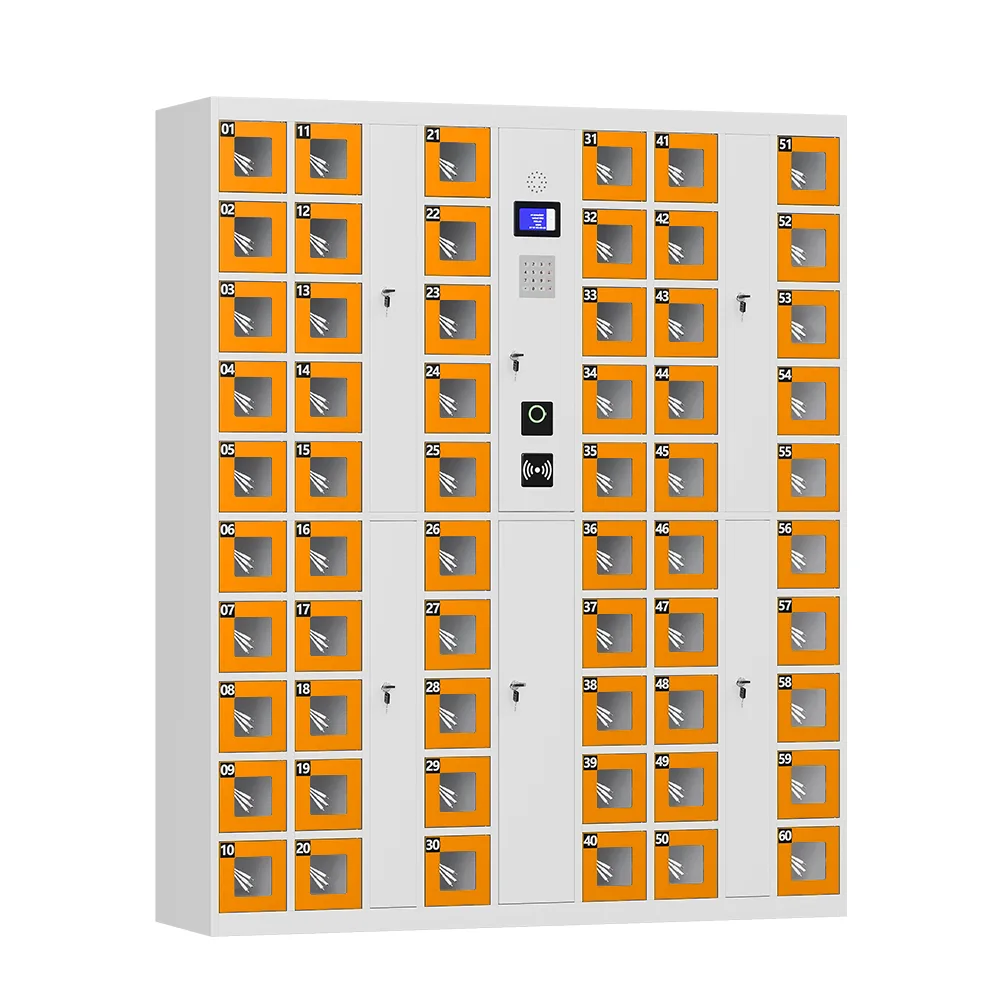
- Multiple access methods. Support for QR code, barcode, PIN, RFID card, and biometric access ensures visitors from any country can use the system without language barriers.
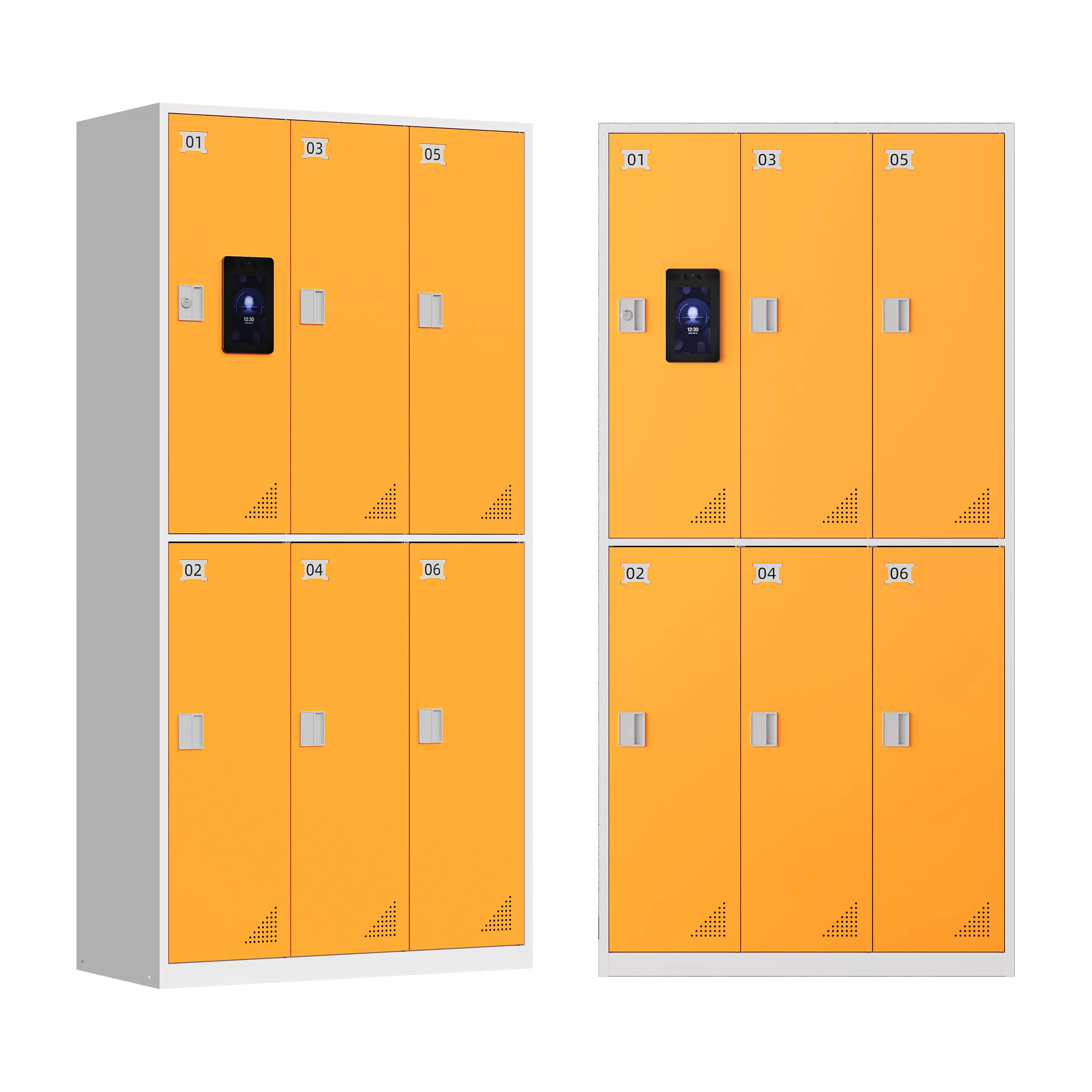
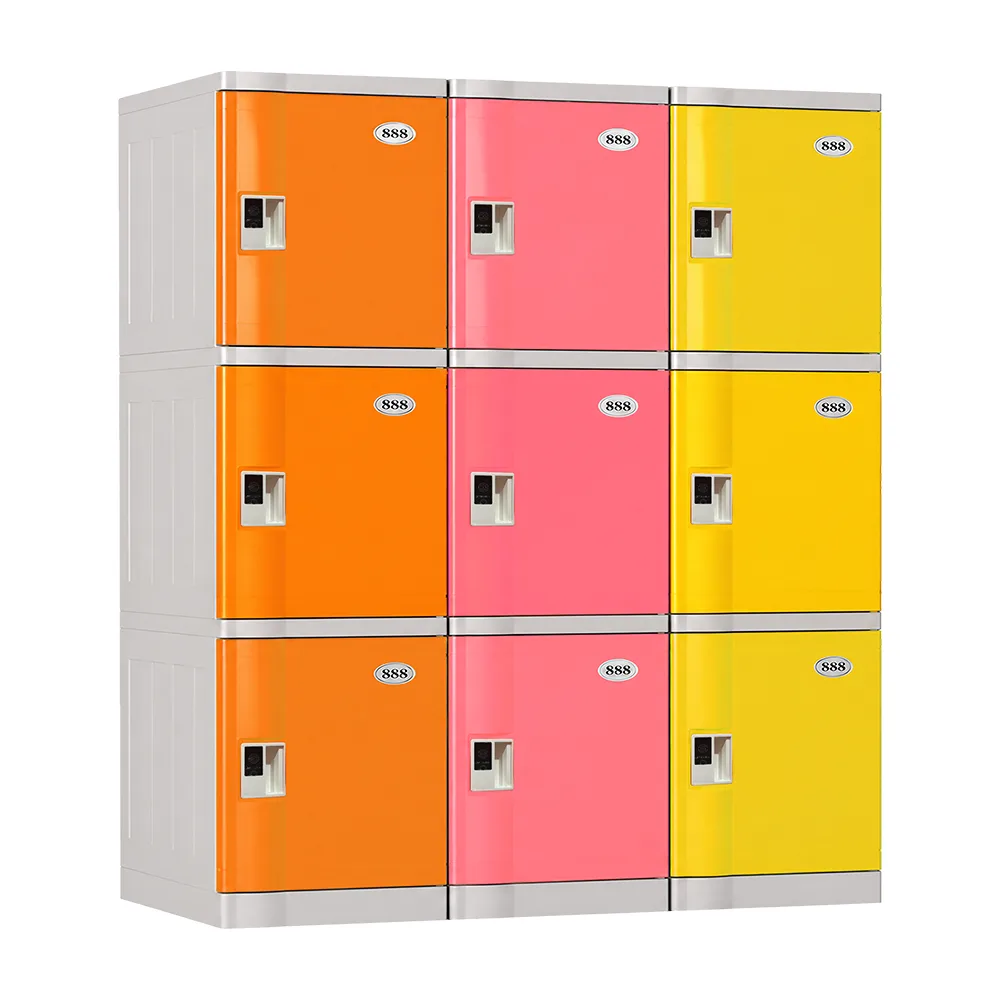
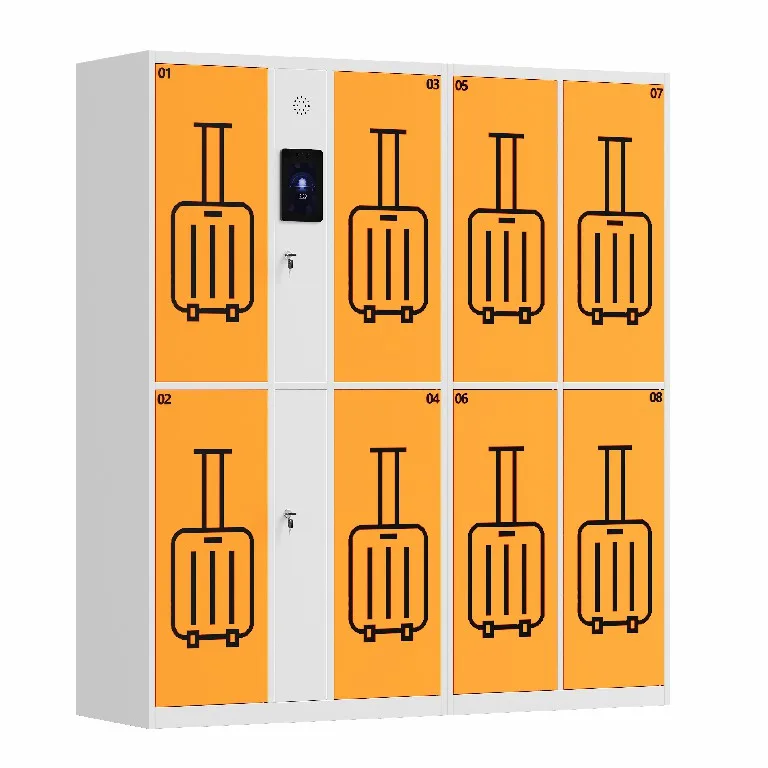
- Mixed compartment sizes. Small compartments for bags and backpacks, medium for carry-ons, and large for full-size suitcases or sports equipment.
- Halfway / re-entry function. Visitors can temporarily open their locker to retrieve an item and continue the same rental session without paying again — essential for all-day guests.
- Flexible pricing engine. Operators set hourly, daily, weekly, and promotional rates from a central dashboard, with support for seasonal and dynamic pricing.
- Cloud management platform. Real-time occupancy monitoring, transaction reports, revenue analytics, and remote troubleshooting from any internet-connected device.
- Multilingual interface. English, Spanish, French, Arabic, Chinese, Vietnamese, and other languages on the touchscreen to serve international visitors.
- Ventilation & durable build. Built-in ventilation prevents odor buildup from stored items; powder-coated steel resists corrosion in humid or coastal locations.
- Safety certifications. Overload, over-voltage, and short-circuit protection for any charging-enabled compartments; flame-retardant construction for safety compliance.
- Custom branding. Custom RAL colors, logo printing, and branded screen interfaces so the locker bank matches your attraction visual identity.
Optimal Placement Locations Inside Tourist Attractions
Even the best locker system underperforms if placed in a low-visibility corner. High-conversion locations include:
- Main entrance / ticket hall. The first thing visitors see — captures demand immediately and sets expectations.
- Near information desks and waiting areas. Visitors waiting for tours or members of their party naturally notice and use lockers.
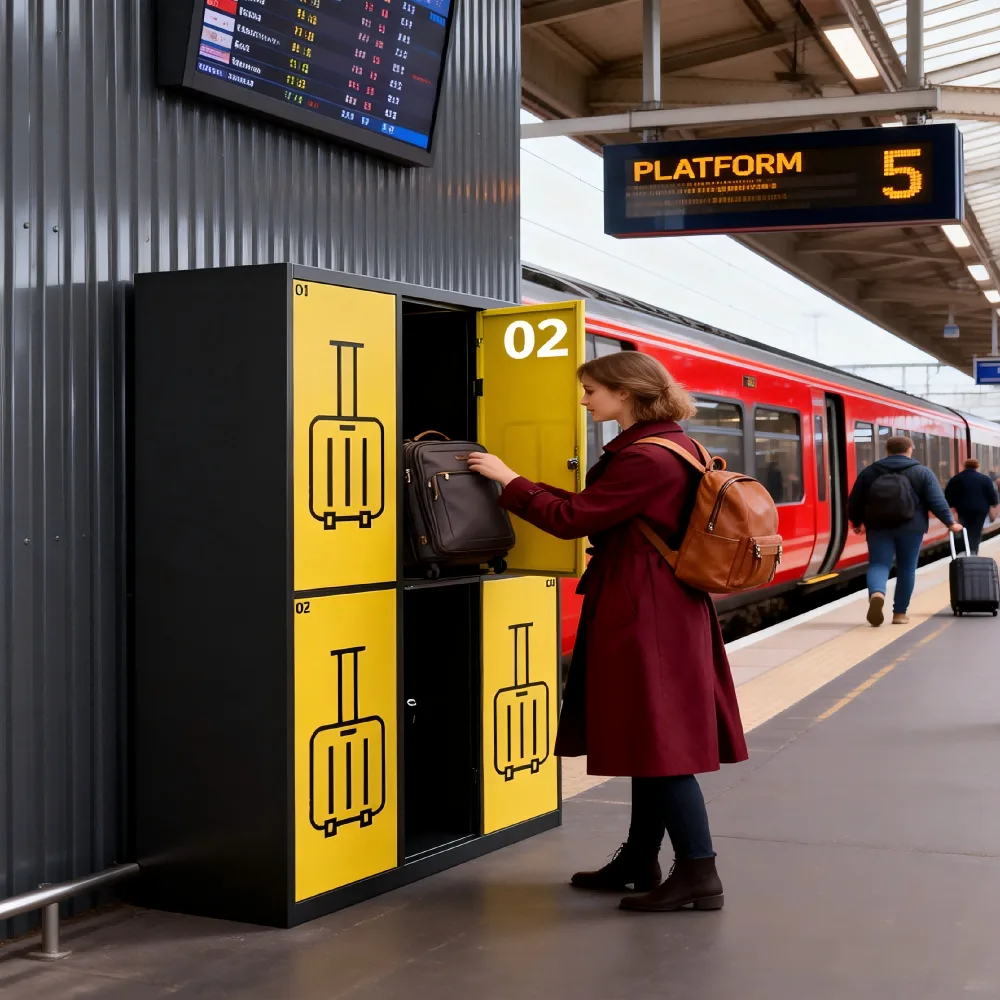
- Group arrival zones. Cruise passengers and tour groups arrive with luggage and need storage before entering exhibits.
- Adjacent to food courts and restaurants. Visitors stopping for food can store bags before sitting down, increasing comfort and order value.
- Near gift shops and retail areas. Shoppers can drop bags before browsing, encouraging longer retail sessions.
- Exit gates and transit connections. For multi-site attractions or large parks, satellite locker banks prevent visitors from having to walk back to the entrance.
| UFUN PRO TIP Place a small, eye-catching signage stand at the attraction entrance even if the lockers are located slightly deeper inside. Visitors who know storage is available are far more likely to seek it out — and signage at the entrance primes the expectation before they even reach the lockers. |
Pricing Models and Monetization Strategies
Choosing the right pricing model depends on your visitor profile, location, and competitive landscape. The most common approaches include:
| Pricing Model | 가장 적합한 대상 | Consideration |
| Hourly rate | Short-stay visitors, transit hubs | Low barrier to trial, high turnover per compartment |
| Flat daily rate | All-day tourists, attractions | Simple to understand, predictable revenue |
| Tiered by size | Mixed visitor segments | Large suitcases pay premium, small bags pay less |
| Free with purchase | Attractions wanting maximum adoption | Lockers as loss leader to boost dwell time |
| Membership / subscription | Frequent visitors, locals | Recurring revenue, builds loyalty |
| Dynamic / surge pricing | Peak seasons, cruise days | Maximizes revenue during high-demand windows |
| Sponsored / branded | High-foot-traffic locations | Advertising revenue offsets or replaces rental fees |
Many successful attractions combine two or more models — for example, a flat daily rate with size-based tiers, plus dynamic surge pricing during peak weeks. The UFUN cloud platform supports all of these configurations out of the box, allowing operators to test and optimize pricing over time.
Implementation Roadmap: From Decision to Revenue
Deploying a smart luggage locker system follows a straightforward four-phase process:
- Phase 1 — Assessment (Week 1–2). Analyze visitor flow, peak hours, luggage types, and existing pain points. Determine optimal compartment mix and placement location.
- Phase 2 — Configuration (Week 2–4). Select compartment configuration, access methods, branding, and pricing structure. Confirm power and network requirements at the installation site.
- Phase 3 — Installation (Week 4–8). Manufacturing, shipping, on-site installation, software setup, and staff training. Most installations are completed in 1–3 days.
- Phase 4 — Launch & Optimize (Ongoing). Launch with clear signage, monitor usage data, adjust pricing based on real occupancy patterns, and expand capacity as demand grows.
자주 묻는 질문
Q: How much does a smart luggage locker system cost?
A: Pricing depends on the number of compartments, access methods, customization level, and shipping destination. A standard 12–24 compartment bank typically ranges from $2,000 to $6,000 USD, with larger custom configurations priced accordingly. UFUN offers OEM/ODM pricing for volume orders and project-based quotations. Contact our team for a free site-specific quote.
Q: How long does it take to recover the investment?
A: For mid-to-high traffic attractions, most operators recover the full equipment cost within 6–12 months through rental revenue alone. When factoring in secondary spending uplift, labor savings, and advertising revenue, the payback period is often shorter. Low-traffic sites may take 12–18 months, but the system continues generating profit for 8–10 years with minimal maintenance.
Q: Do smart luggage lockers require on-site staff to operate?
A: No. The entire rental, payment, access, and return process is fully self-service. Visitors complete every step independently via the touchscreen or mobile device. Operators only need remote monitoring through the cloud dashboard and occasional on-site maintenance — typically a quick visual check and wipe-down once per week.
Q: What happens if a visitor forgets their access code or loses their ticket?
A: The system supports multiple recovery methods. Visitors can retrieve access via their registered phone number, email, or payment transaction ID. For added security, operators can set up ID verification for manual override through the cloud dashboard — all actions are logged for accountability.
Q: Can the lockers be used outdoors or in humid environments?
A: UFUN locker systems are built with powder-coated cold-rolled steel and corrosion-resistant components, making them suitable for covered outdoor areas and humid coastal locations. For fully exposed outdoor installations, we recommend a weatherproof canopy or our outdoor-rated enclosure option with enhanced sealing and ventilation.
Q: How do I handle payments from international visitors?
A: UFUN lockers support multiple payment options including credit/debit cards, mobile wallets (Apple Pay, Google Pay), QR code payments, and cash where required. The multilingual interface automatically displays prices in the visitor selected language, and the cloud platform reconciles all transactions in your preferred currency.
Conclusion: Stop Leaving Revenue on the Table
Tourist attractions operate in an increasingly competitive environment where every dollar of secondary revenue matters. Visitors arrive with luggage, and they will always need somewhere to put it. The only question is whether your destination captures that demand as profit — or lets it walk out the door in the form of shortened visits, frustrated guests, and missed spending opportunities.
Smart luggage lockers offer a rare combination of benefits: immediate revenue generation, minimal operating cost, improved visitor satisfaction, and a strong return on investment. They require no additional staff, occupy a small footprint, and integrate seamlessly into any attraction environment.
For museum directors, theme park operators, scenic area managers, and transit hub administrators, the decision is no longer whether to offer luggage storage. It is how much revenue is being left untapped by not offering it yet.