
Introduction: Why Standard Smart Lockers Rarely Fit Your Market
Walk into any trade show or browse any B2B marketplace, and you’ll find dozens of “standard” smart locker models — identical dimensions, identical software, identical access methods. But here’s the problem that every experienced buyer discovers sooner or later: a locker that works perfectly in one market often fails completely in another.
Payment habits differ. A cashless society needs card and QR support; an emerging market may still rely heavily on coins and banknotes. Brand expectations differ. A luxury hotel chain needs custom colors and logo integration; a budget supermarket chain prioritizes cost and durability above all. Operational logic differs. A gym wants hourly billing with membership card integration; an airport needs 24/7 unattended operation with multi-language support.
This is why smart locker OEM (Original Equipment Manufacturing) and ODM (Original Design Manufacturing) services have become the standard approach for serious distributors, system integrators, and chain operators — not a premium upgrade. In this guide, we break down exactly what customization entails, how the manufacturing process works, what to look for in a factory partner, and how to avoid the most common sourcing mistakes.
OEM vs. ODM: Understanding the Difference Before You Source
The two terms are often used interchangeably, but they represent fundamentally different collaboration models. Choosing the right one at the start of your project saves significant time and cost.
OEM: Branding on a Proven Platform
Under an OEM arrangement, the factory produces an existing, validated product platform with your branding applied. The core hardware structure, electronics, and software remain standard, but the exterior — logo, color, screen interface, packaging — carries your brand identity.
- Ideale per: Distributors entering a new market, buyers with tight timelines, or projects where the standard product already meets functional requirements.
- Typical lead time: 25–35 days for mass production after branding artwork confirmation.
ODM: Custom Design From the Ground Up
ODM goes deeper. The factory works with you to modify or redesign the product — structural changes, new compartment layouts, custom electronics, bespoke software features, or entirely new form factors. You’re not just putting your logo on an existing box; you’re co-developing a product that may not exist in any catalog.
- Ideale per: System integrators with specific integration requirements, chain brands with unique operational needs, or buyers targeting a niche use case that standard products don’t cover.
- Typical lead time: 45–90 days, including design, prototyping, testing, and mass production.
Which One Do You Need?
| Factor | OEM | ODM |
| Timeline | Fast (4–6 weeks) | Longer (6–12 weeks) |
| Cost per unit | Lower | Higher (NRE + tooling) |
| Customization depth | Branding only | Structural + functional |
| Minimum order quantity | Usually lower | Higher (MOQ applies) |
| Technical risk | Low (proven platform) | Medium (new design needs validation) |
| Market differentiation | Moderate | Alto |
Many buyers start with OEM for their first order, then move to ODM once they’ve validated market demand — a sensible strategy that balances speed with long-term competitiveness.
The Six Pillars of Smart Locker Customization
A professional smart locker manufacturer can customize across six distinct dimensions. Understanding each one helps you specify exactly what you need — and avoid paying for features you don’t.
1. Industrial Design and Brand Identity
The visual appearance of your locker is often the first thing customers notice, and it directly impacts whether the unit feels like a premium amenity or a generic piece of infrastructure.
Customizable elements include:
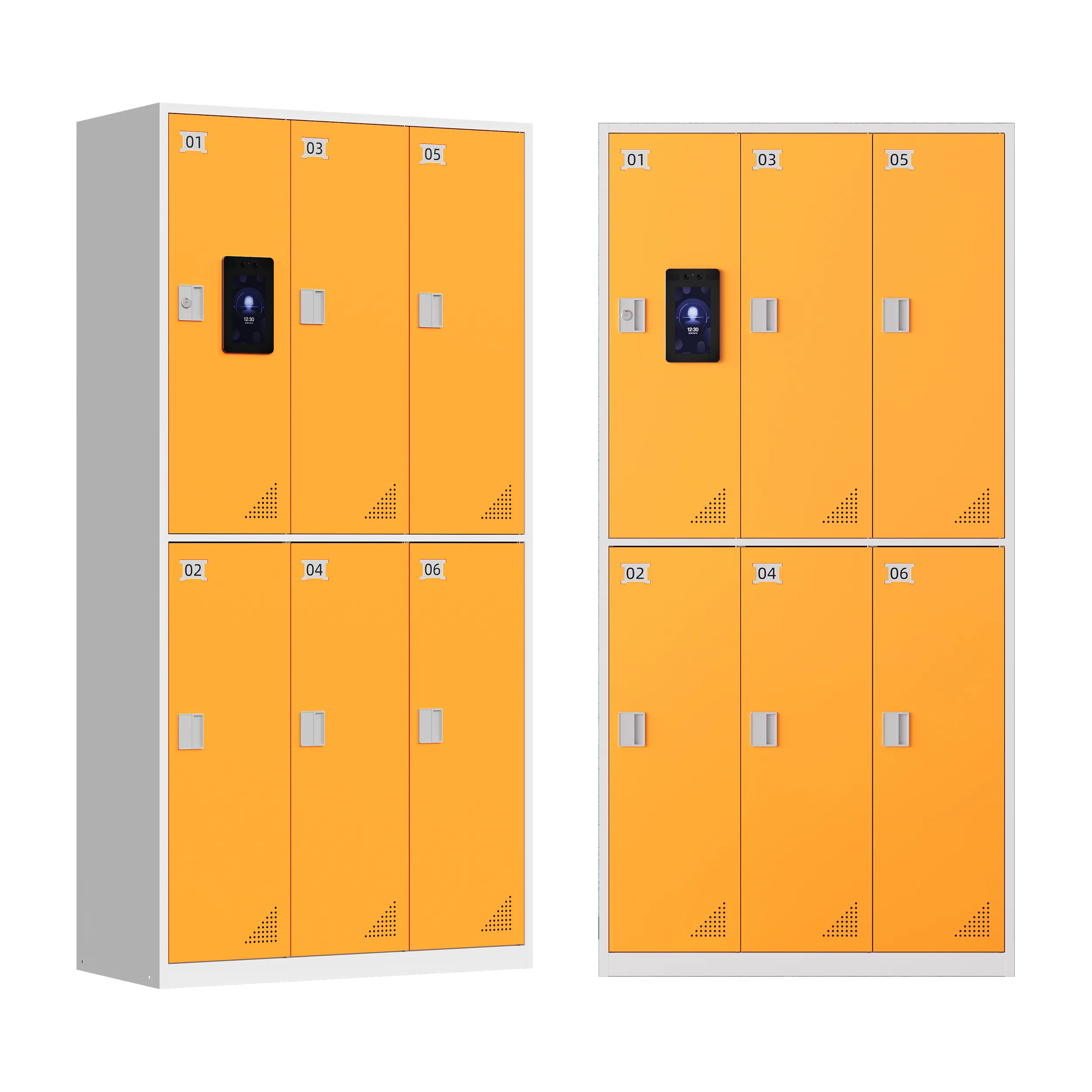
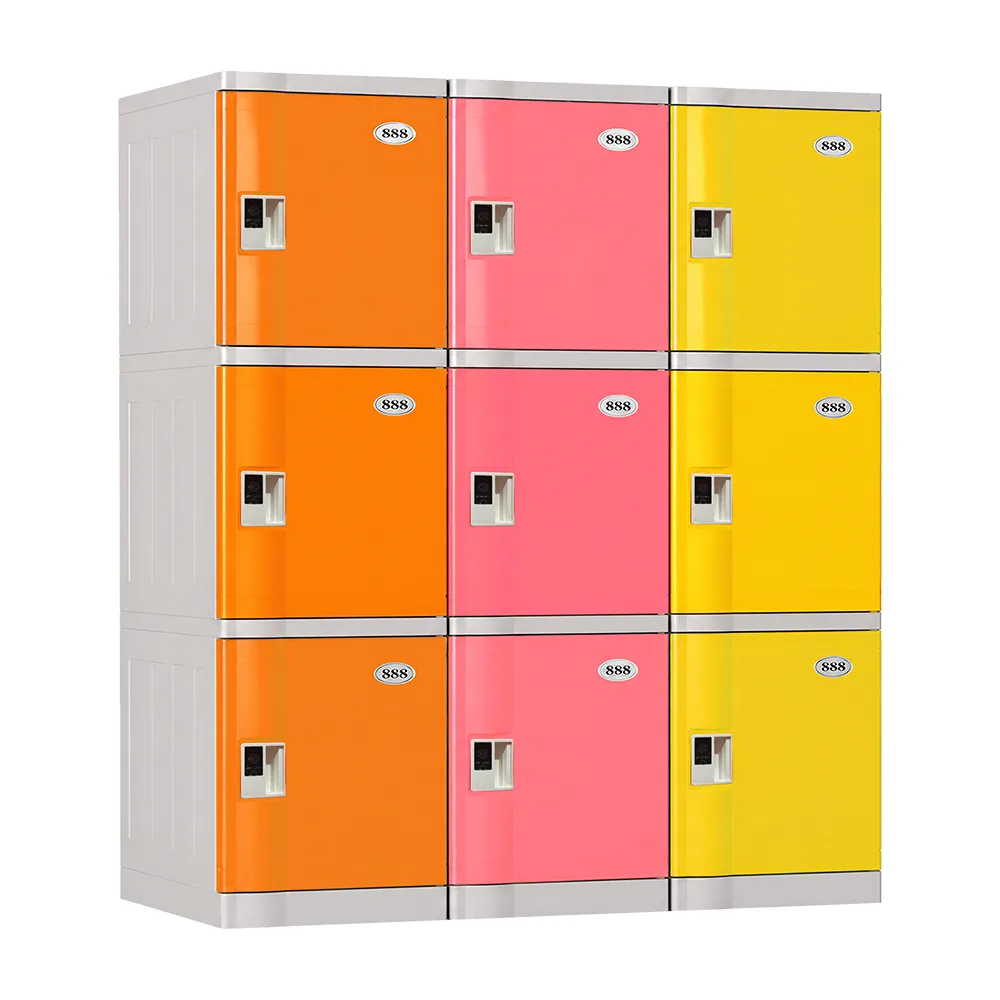
- Cabinet color — RAL color matching to align with your brand’s visual identity or existing facility design
- Logo application — Silk-screen printing, UV printing, laser engraving, or adhesive branding on doors, sides, and screen bezels
- Door panel design — Custom cutouts, window shapes, or decorative patterns
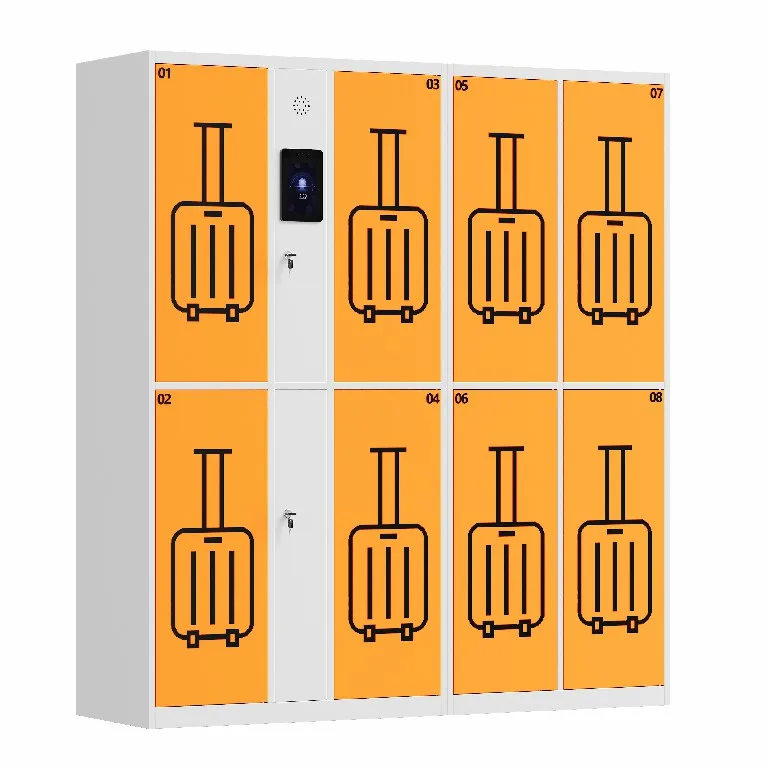
- Overall dimensions — Height, width, and depth adjusted to fit your installation site — standard reference is approximately H1800×W2550×D460mm, but custom sizes are common
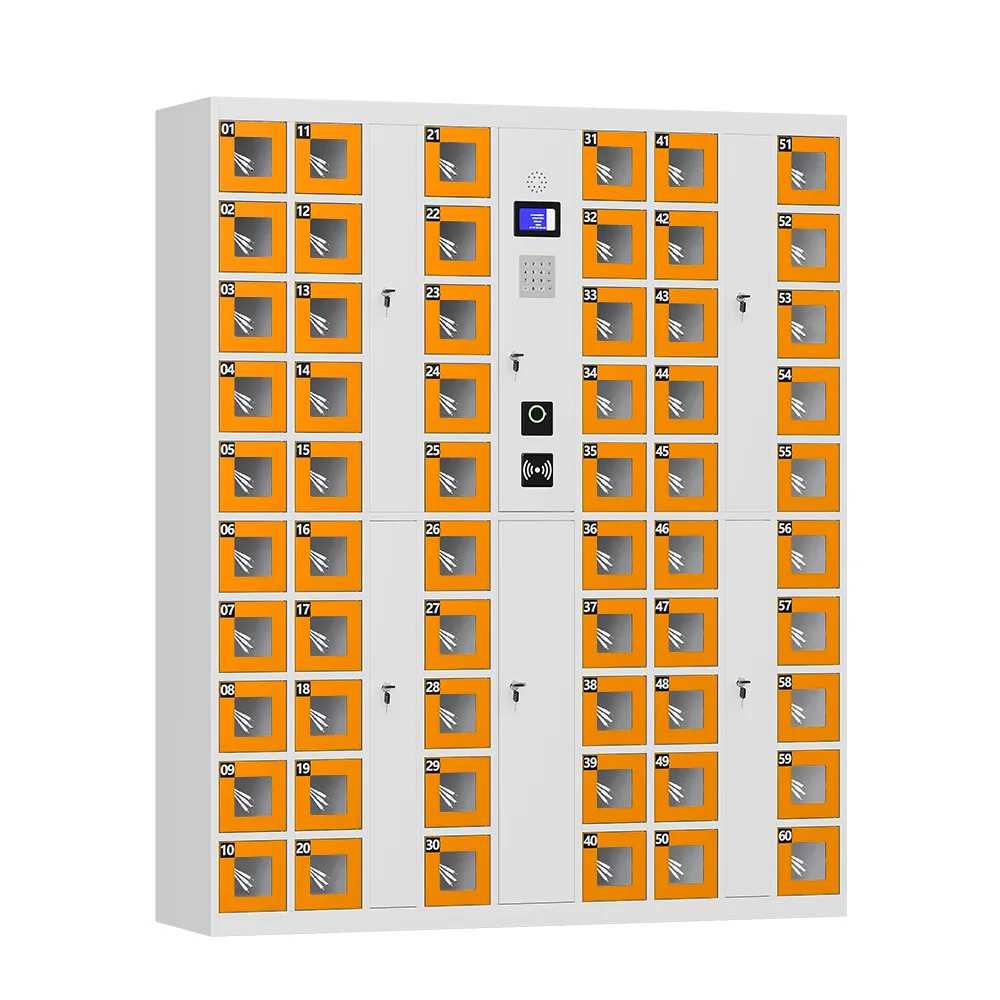
- Compartment layout — Number of doors, size distribution (small/medium/large mix), and internal shelving configured for your specific use case
- Screen interface — Custom boot animation, branded UI theme, and multi-language support
Pro tip: If you’re ordering for a chain with multiple locations, lock in the color and branding specification in writing before production — even a slight RAL mismatch between batches will be noticeable when units are installed side by side.
2. Payment System Integration
Payment is where many standard locker deployments fail. A system that only supports WeChat Pay and Alipay is useless in Europe; a coin-only system frustrates customers in cashless markets. A capable factory should support:
| Payment Type | Common Use Cases |
| Cash / coins | Emerging markets, low-tech environments, older demographics |
| Banknotes | High-value storage, airports, train stations |
| Card payment (RFID/NFC) | Corporate offices, gyms, schools with existing card systems |
| Credit/debit card | Tourist areas, international airports, Western markets |
| QR code payment | China (WeChat/Alipay), SE Asia (GrabPay, GoPay), global (PayPal) |
| Mobile wallet | Apple Pay, Google Pay, Samsung Pay |
| Membership / prepaid account | Gyms, residential buildings, corporate campuses |
| Free mode (no payment) | Hotels, offices, schools where storage is an included amenity |
Critical consideration: Payment integration often requires local certification (PCI DSS for card payments, local QR payment provider approval). Confirm that your factory has experience with your target market’s payment ecosystem before committing.
3. Billing and Operational Logic
The software that runs your locker is just as important as the hardware. Standard systems offer basic hourly or daily billing, but real-world operations often require more sophisticated logic:
- Flexible rate structures — Hourly, daily, weekly, monthly, or per-use pricing
- Tiered pricing — Different rates for different compartment sizes
- Peak/off-peak pricing — Dynamic rates based on time of day or season
- Prepaid vs. postpaid — Pay upfront or pay at retrieval
- Overtime fees — Automatic additional charges when storage exceeds the paid period
- Halfway retrieval — Allow users to temporarily open their locker to add or remove items without ending the rental session — especially valuable for tourists and shoppers
- Reservation system — Let users book a locker in advance via app or website
- Free grace period — A short window (e.g., 15 minutes) before charges begin
- Refund logic — Rules for early returns, canceled bookings, or system errors
All of these can be implemented through secondary software development. The key question to ask your factory is: “Can your software team build this, and what’s the development cost and timeline?”
4. Access Control Configuration
How users open their locker affects adoption speed, security, and operational cost. Most factories support multiple methods, and you can choose one or combine several:
- Barcode / QR code — Fast, no app required, ideal for one-time users (airports, supermarkets, tourist attractions)
- PIN code — Simple, no phone needed, works well for older users or low-tech markets
- RFID card / wristband — Integrates with existing access systems (gyms, offices, schools)
- Fingerprint recognition — High security, individual accountability, good for corporate and industrial settings
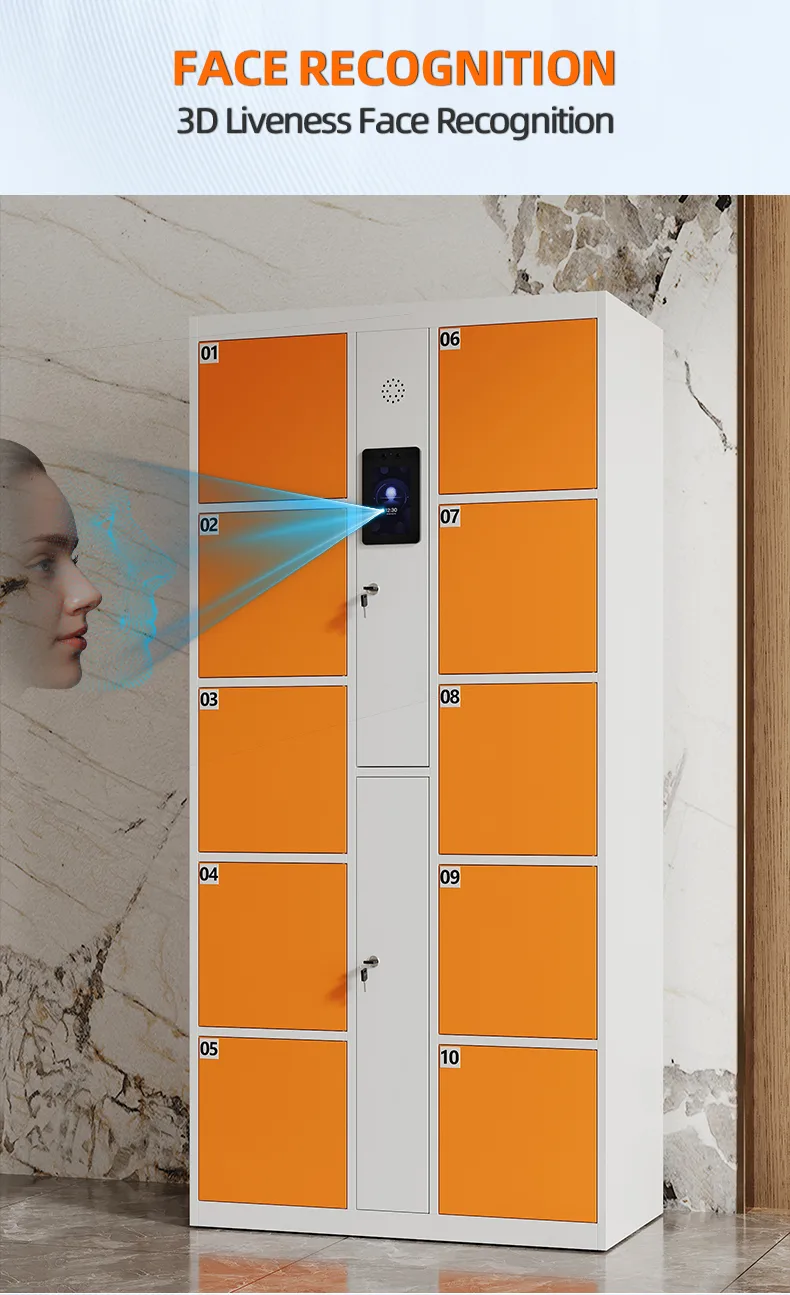
- Facial recognition — Contactless, premium experience, growing adoption in Asia and the Middle East
- Mobile app / Bluetooth — App-based opening, rich feature set, but requires users to download an app
- SMS verification — Code sent to phone number, no app needed, good for markets with low smartphone penetration
Raccomandazione: For public-facing lockers, always offer at least two access methods — a primary (QR code) and a fallback (PIN code) — so users aren’t stuck if one method fails.
5. Software Integration and API
For system integrators and chain operators, the locker must talk to other systems. A factory that offers an open API and supports secondary development is worth its weight in gold.
Common integration scenarios:
- Membership systems — Gym members, hotel guests, or residential tenants use their existing credentials
- Property management platforms — Lockers appear in the same dashboard as access control, lighting, and HVAC
- Payment gateways — Transactions flow directly into your existing payment processing
- Inventory / asset management — Track shared equipment (tablets, radios, tools) stored in lockers
- Access control systems — Locker access tied to building entry credentials
- Analytics platforms — Usage data feeds into your BI tools for reporting and optimization
Ask for: API documentation, SDK availability, webhook support, and case studies of previous integrations. A factory that can’t provide API documentation is not ready for integration projects.
6. Connectivity and Environment
Where and how the locker is installed determines additional customization needs:
- Connectivity — WiFi (standard), wired LAN (more reliable), 4G/5G (for locations without WiFi), or offline mode (for environments with no network)
- Environment — Indoor standard, outdoor weatherproof (IP54+), waterproof (IP65 for extreme conditions), or corrosion-resistant (coastal areas with salt air)
- Power — Standard 110–240V AC, battery backup (for power outage scenarios), or solar (for remote locations)
- Temperature range — Standard (0–40°C), extended (-20–50°C for outdoor or industrial environments)
The Complete OEM/ODM Manufacturing Process: Step by Step
Understanding the process helps you set realistic timelines and avoid surprises. Here’s what a professional engagement looks like:
Phase 1: Requirements Consultation (Days 1–7)
This is the most important phase. A good factory will ask detailed questions:
- What industry and use case? (supermarket, gym, hotel, airport, office, etc.)
- What’s the installation site like? (dimensions, power availability, network access, indoor/outdoor)
- What’s your target market? (country, payment habits, language, regulations)
- What’s your budget range and expected order quantity?
- Do you have existing systems to integrate with?
- What’s your required timeline?
Red flag: A factory that doesn’t ask these questions and immediately sends a quote is likely selling a generic product, not providing customization.
Phase 2: Design Proposal and Quotation (Days 7–14)
Based on your requirements, the factory provides:
- Cabinet structure drawings (2D or 3D)
- Access method and payment configuration recommendations
- Software feature list and development scope
- Detailed quotation (unit price, tooling/NRE fees, software development fees, shipping)
- Project timeline with milestones
Review carefully: Make sure every feature you discussed is listed in the quotation. Verbal promises don’t count — if it’s not in writing, it won’t happen.
Phase 3: Sample or Prototype (Days 14–35)
For OEM projects, this may be a branded sample unit with your logo and color applied. For ODM projects, this is a functional prototype that validates the new design.
What to check on the sample:
- Color accuracy (compare to your RAL specification)
- Logo quality (sharpness, alignment, durability)
- Build quality (welds, hinges, door alignment)
- Software functionality (test every feature you specified)
- Access methods (test each one multiple times)
- User experience (ask someone unfamiliar with the product to use it — if they struggle, the UI needs work)
Phase 4: Small-Batch Trial Production (Days 35–50)
Once the sample is approved, a small batch (typically 5–20 units) is produced to validate manufacturing consistency. This phase catches issues that only appear in production — material inconsistencies, assembly errors, software bugs at scale.
Don’t skip this phase. Jumping straight to mass production from a single sample is the #1 cause of quality issues in custom manufacturing.
Phase 5: Mass Production and Quality Inspection (Days 50–75)
Full production runs with pre-shipment quality control. A reliable factory performs:
- Incoming material inspection — Steel thickness, electronic components, locks
- In-process inspection — Weld quality, powder coating, assembly
- Final inspection — Functional testing of every unit, cosmetic inspection, packaging check
- Aging test — 24–72 hour continuous operation test on a sample of units
You should request: Inspection reports, photos or video of production, and the option for a third-party inspection (SGS, BV, Intertek) before shipment.
Phase 6: Logistics, Installation, and After-Sales Support (Days 75+)
- Shipping — Sea freight (most economical, 25–40 days), air freight (fast, 5–10 days, expensive), or express (samples only)
- Installation guidance — Written manuals, video tutorials, remote technical support, or on-site installation (for large projects)
- Warranty — Standard 1–2 years, with extended warranty options
- After-sales — Spare parts availability, software updates, technical support response time
How to Evaluate a Smart Locker OEM/ODM Factory
Not every factory that claims to offer OEM/ODM actually has the capability. Here’s what to verify:
Manufacturing Capability
- Factory size — A genuine smart locker factory should have at least 3,000–5,000 sqm of production space with in-house sheet metal processing, powder coating, assembly, and testing
- Production capacity — Monthly output of 500+ units indicates sufficient scale
- Equipment — CNC punching machines, laser cutters, automated bending robots, powder coating lines — in-house equipment means better quality control and faster lead times
Technical Capability
- In-house R&D team — Hardware engineers, software developers, industrial designers — not just a sales team outsourcing design
- Software ownership — The factory should own its locker management software, not license it from a third party (which limits customization)
- Patents and certifications — CE, FCC, RoHS are baseline; look for additional patents indicating genuine innovation
- API and SDK availability — Proof that integration is actually possible, not just promised
Project Experience
- Export experience — Has the factory shipped to your target market? Do they understand local regulations and certification requirements?
- Case studies — Ask for references from similar projects (similar industry, similar customization scope)
- Long-term clients — A factory with repeat clients is doing something right
Quality Management
- ISO 9001 certification — Baseline quality management system
- Inspection process — Documented QC procedures at each production stage
- Defect rate — Ask for historical defect rates — anything above 2% is a concern
Common Sourcing Mistakes and How to Avoid Them
Mistake 1: Choosing Based on Price Alone
The cheapest quote often hides costs — lower-quality steel, generic components, no software support, poor after-sales. A locker that fails after 6 months costs far more than the upfront savings.
Fix: Compare total cost of ownership, not just unit price. Factor in warranty, spare parts costs, software updates, and expected lifespan.
Mistake 2: Skipping the Sample Phase
We’ve said it before, but it bears repeating: never go to mass production without approving a sample. The sample is your only chance to catch issues before they’re replicated in hundreds of units.
Fix: Budget for sample costs (typically $200–$800 per unit, often refundable against bulk orders) and add 2–3 weeks to your timeline.
Mistake 3: Vague Requirements
“I want a smart locker” is not a specification. The more detailed your requirements, the more accurate the quote and the final product.
Fix: Provide a written specification document covering: dimensions, compartment layout, access methods, payment methods, billing logic, software features, branding requirements, target market, and quantity.
Mistake 4: Ignoring Certification and Compliance
Different markets require different certifications. Shipping non-compliant products can result in customs seizure, fines, or legal liability.
Fix: Ask the factory which certifications they hold and whether they can obtain additional certifications for your market. Factor certification costs and timelines into your plan.
Mistake 5: No After-Sales Plan
Smart lockers are electronic devices — they will need maintenance, spare parts, and software updates. A factory that disappears after shipment is a liability.
Fix: Confirm warranty terms, spare parts availability and pricing, software update policy, and technical support response time before placing your order.
Who Should Consider OEM/ODM Customization?
OEM/ODM customization isn’t for everyone. If you need 5 lockers for a single location and a standard model meets your needs, customization may not be worth the time and minimum order quantity. But it’s the right choice if you’re:
- An overseas distributor or agent building your own brand in a local market
- A system integrator who needs lockers to connect with a larger smart building or access control platform
- A chain operator (supermarkets, gyms, hotels, residential buildings) requiring consistent branding and standardized operations across multiple locations
- A venue operator (airport, train station, tourist attraction, stadium) with specific space, payment, or traffic requirements
- A corporate or industrial client needing integration with existing employee ID systems and asset management platforms
- A startup or entrepreneur validating a new locker-based business model that requires bespoke hardware and software
Domande frequenti
Q: What’s the minimum order quantity (MOQ) for OEM/ODM?
A: OEM branding typically has an MOQ of 20–50 units. ODM custom design usually requires 50–100+ units, depending on the scope of customization. Some factories offer lower MOQs for first orders to build a relationship.
Q: How long does a typical OEM/ODM project take?
A: OEM: 4–6 weeks from artwork confirmation to shipment. ODM: 8–12 weeks including design, prototyping, testing, and production. Complex software integration can add 2–4 weeks.
Q: Can I customize the software without customizing the hardware?
A: Yes. Many buyers use standard hardware with customized software — for example, standard locker hardware with a custom billing system, branded user interface, or API integration with their platform. This is sometimes called “software ODM.”
Q: What certifications do smart lockers need for export?
A: Baseline: CE (Europe), FCC (US), RoHS (environmental). Market-specific: UKCA (UK), IC (Canada), RCM (Australia), BIS (India), NOM (Mexico). Payment-related: PCI DSS (if processing card payments). Your factory should advise on specific requirements for your target market.
Q: Can I visit the factory before placing an order?
A: Absolutely, and we recommend it. A factory visit lets you verify production capacity, quality control processes, and team capability in person. Most professional factories welcome client visits and can arrange airport pickup and accommodation.
Q: What payment terms are standard?
A: Typically 30% deposit upon order confirmation, 70% balance before shipment (after inspection). For large or repeat orders, some factories offer more flexible terms such as L/C (letter of credit) or installment payments.
Q: Do you provide installation support?
A: Yes. Standard support includes detailed installation manuals, video tutorials, and remote technical guidance. For large projects (50+ units), on-site installation support can be arranged at additional cost.
Conclusion: Customization Is the Key to Market Success
The smart locker market is growing rapidly, but it’s also becoming increasingly competitive. Buyers who settle for generic, off-the-shelf products find themselves competing on price alone — a race to the bottom that benefits no one.
OEM/ODM customization is what allows you to build a product that genuinely fits your market, your brand, and your operational needs. It turns a commodity into a differentiated solution, and it’s the foundation of long-term success in the smart locker industry.
The key is choosing the right partner — a factory with genuine in-house R&D, proven manufacturing capability, export experience, and a commitment to quality. With the right partner, the customization process is smooth, predictable, and delivers a product that outperforms anything available off the shelf.
────────────────────────────────────────────────────────────
Ready to Start Your OEM/ODM Project?
We are a professional smart locker manufacturer with in-house R&D, full production capability, and experience delivering customized solutions to clients across Europe, North America, Southeast Asia, the Middle East, and Africa.
Whether you need OEM branding on a proven platform or full ODM custom design, our team can guide you from concept to mass production.