
Elevate Service Experience & Reduce Operational Costs with Automated Storage Solutions
The global self-service luggage locker market is projected to grow at a 9.3% CAGR through 2033, reaching $2.95 billion as cities, transport hubs, tourist destinations and commercial operators upgrade from manned storage desks to automated solutions. Across shopping malls, scenic attractions, libraries, hospitals and transportation centers, item storage is a constant, high-frequency demand — yet traditional attended storage remains one of the most consistent pain points in facility operations.
Long lines, limited operating hours, high labor costs, security disputes and inconsistent service quality all turn a basic amenity into an operational bottleneck, especially during peak visitor periods. Smart self-service lockers solve these issues by delivering secure, 24/7, contactless storage that works for both visitors and operators.
This guide breaks down everything facility managers, procurement teams and operators need to know about specifying, deploying and managing smart luggage storage systems.
1. The Hidden Costs of Traditional Attended Storage
Most operators underestimate the full cost of manual, staffed storage services. The impact extends far beyond payroll:
- Rising labor costs— Attended desks require dedicated staff across all operating hours. For extended-hour facilities, this can mean 3–4 full-time equivalents per location, plus benefits, training and turnover costs. Labor typically accounts for 60–70% of total storage operation expense.
- Peak-time queues & lost revenue— Visitors abandon storage when lines are too long, either carrying bags throughout their visit and spending less, or leaving early entirely. During holidays and events, wait times can exceed 20 minutes, directly reducing visitor dwell time and secondary spending.
- Limited service hours— Storage desks close when staff shifts end, even when the facility itself stays open later. Visitors arriving outside standard hours have no storage option, damaging overall satisfaction.
- Security & liability risks— Manual check-in systems create no verifiable chain of custody. Lost items, wrong pickups and theft claims create disputes, liability costs and reputational damage. Keys and paper tickets are easily lost, copied or transferred.
- Inconsistent service quality— Service speed, accuracy and friendliness vary by staff member and shift. There is no standardized experience, making it impossible to guarantee consistent service levels across multiple locations.
2. What Are Smart Self-Service Luggage Lockers?
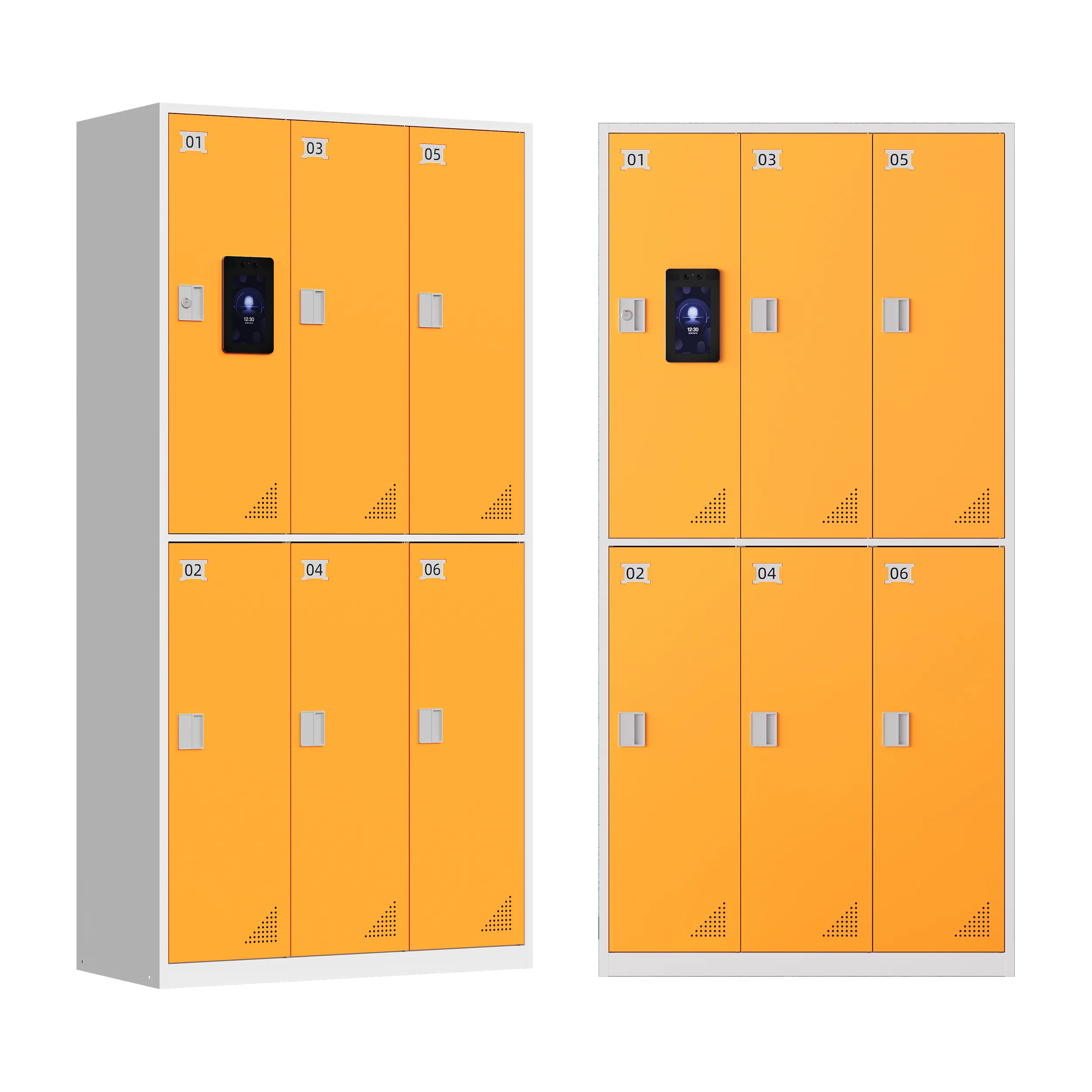
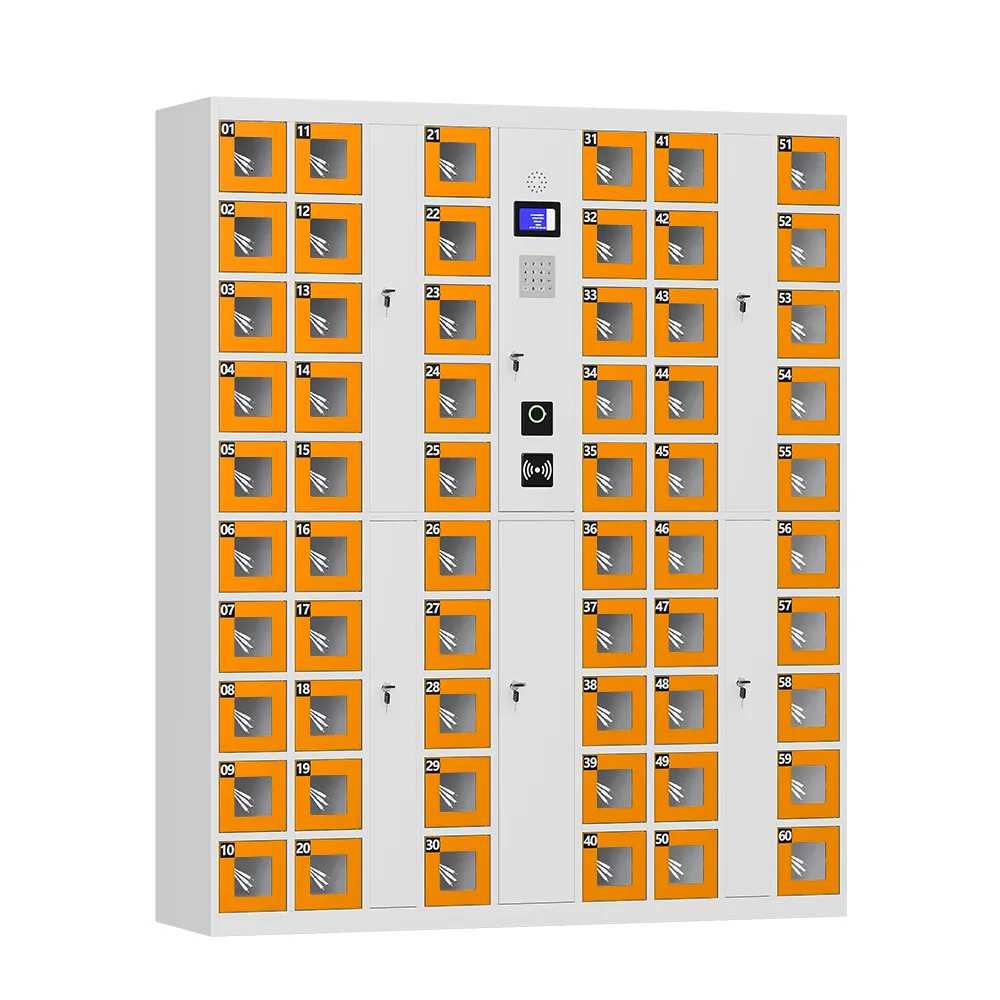
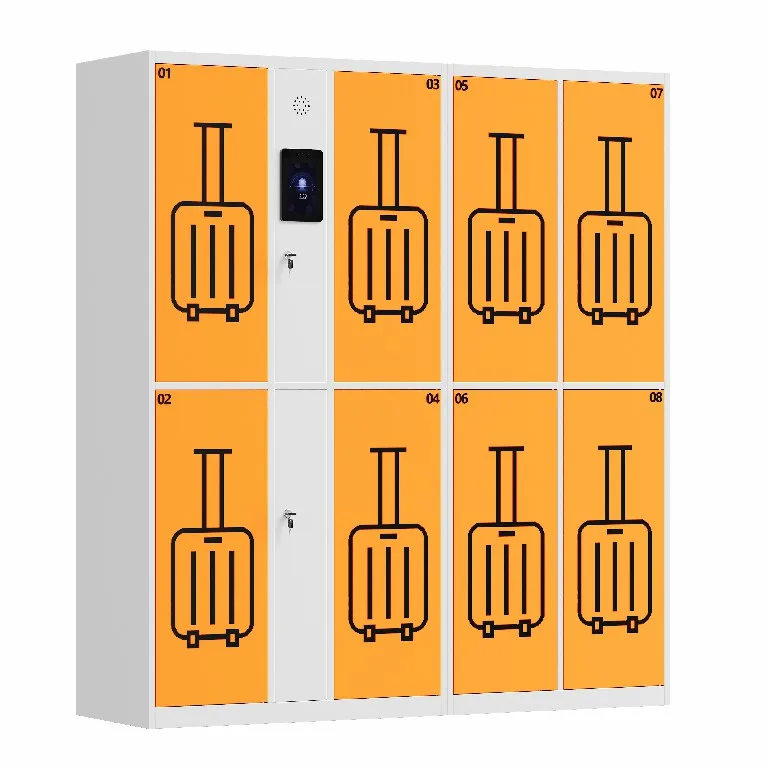
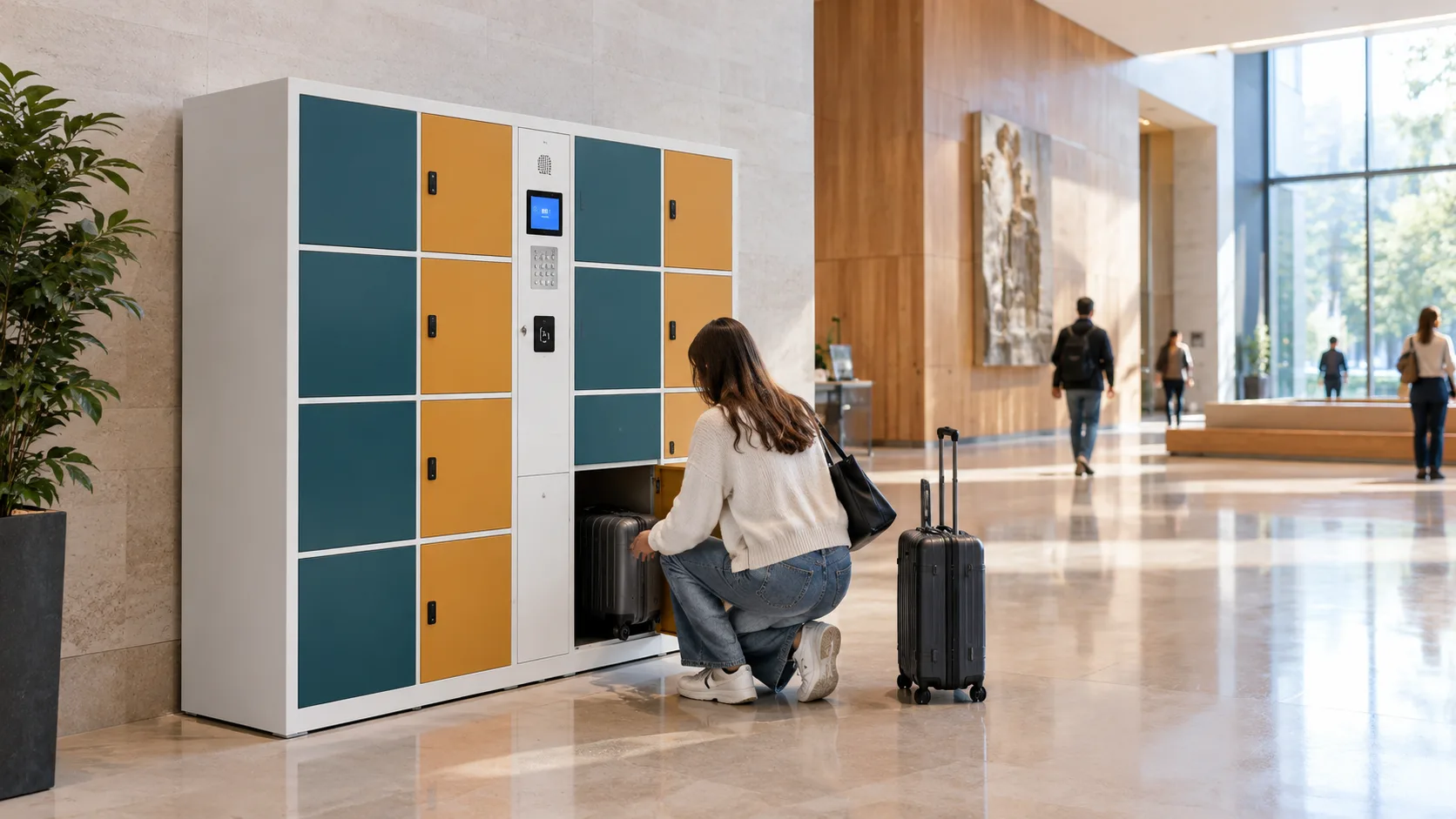
Smart self-service lockers are integrated automated storage systems that replace manned storage desks with self-service terminals. Each system combines physical locker cabinets, electronic access control, user interface and a cloud management platform into one end-to-end solution.
A complete system consists of three layers:
- Terminal locker banks: Heavy-duty steel compartments with individual electronic locks, built for high-traffic public environments
- User interaction layer: Touchscreen interface with multi-mode authentication (QR code, RFID card, PIN, biometric) for self-service deposit and retrieval
- Central management platform: Cloud-based software for real-time status monitoring, usage reporting, remote administration and system configuration
Unlike basic mechanical lockers or simple coin-operated units, smart systems deliver full auditability, remote management and flexible pricing — turning storage from a passive amenity into a managed operational asset.
3. Core Hardware & Build Specifications
Quality and durability matter more in public storage than almost any other locker application. Systems are used hundreds of times per day by strangers, in variable environmental conditions.
3.1 Heavy-Duty Cabinet Construction
- Frame & body: Built from 0.8–1.2mm cold-rolled steel or galvanized steel with anti-corrosion powder coating, suitable for indoor and covered outdoor deployment. Frames are fully welded for structural rigidity.
- Door design: Anti-pry reinforced door edges, concealed hinges and flush construction to resist vandalism and forced entry.
- Environmental rating: Indoor units carry IP40+ protection; covered outdoor and transit hub units are rated IP54 for dust and splash resistance.
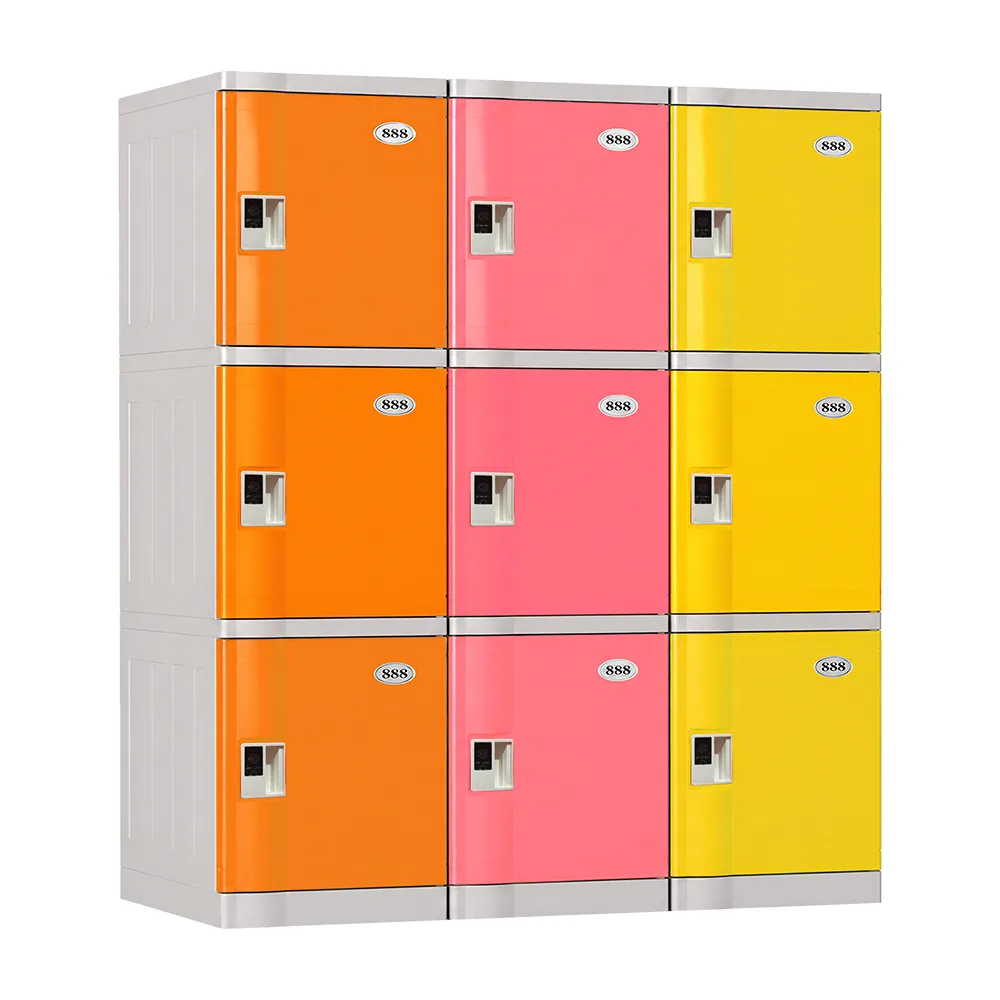
- Compartment flexibility: Mixed compartment sizes within a single bank — small for bags and personal items, medium for carry-ons, large for luggage — to match site demand.
3.2 Multi-Mode Access Systems
Different facilities require different access methods. Quality systems support multiple options:
- QR code / mobile: Ideal for temporary visitors and one-time use; code sent directly to user’s phone, no card or token required
- RFID / IC card: Best for frequent visitors, members and staff; integrates with existing building access cards
- PIN code: Reliable backup option for all user types
- Biometric (fingerprint / face): Highest-security option for restricted areas and high-value item storage
- Barcode ticket: For legacy integration with ticketing systems
3.3 Electronic Locking & Reliability
- Industrial-grade electronic locks rated for 50,000+ operating cyclesfor high-traffic locations
- Door position sensors detect open/closed status and confirm proper latching
- Anti-tamper sensors trigger alerts if forced entry is attempted
- Fail-safe design defaults to secure locked state during power or system failure
3.4 Power & Connectivity
- Backup power: Integrated battery backup maintains full operation for minimum 4 hoursduring power outages
- Offline operation: Systems function fully on local network if cloud connection is lost; data automatically syncs when connectivity is restored
- Low-power design: Energy-efficient components reduce operating cost and extend backup runtime
3.5 User Interface
- 1″ or 21.5″ touchscreen terminal with clear visual instructions
- Multi-language support for international visitor locations
- Step-by-step guidance for deposit and retrieval to minimize user error and support time
4. Integrated Security & Management Platform
The software platform is what separates smart lockers from basic metal cabinets. It delivers visibility, control and efficiency that manual systems cannot match.
4.1 Complete Access Audit Trail
Every deposit and retrieval event is time-stamped and recorded with user identity, compartment number and timestamp. This creates a verifiable chain of custody for every stored item, enabling quick resolution of disputes and eliminating he-said-she-said claims.
4.2 Real-Time Remote Monitoring
Administrators can view full locker status across all locations from a single web or mobile dashboard:
- Live view of available, occupied and out-of-service compartments
- Remote unlock for guest assistance or emergency situations
- Usage statistics by time of day, day of week and location
- Exportable reports for operations, billing and compliance
4.3 Proactive Fault Alerts
The system monitors component health automatically and alerts administrators of issues before they cause downtime:
- Lock malfunctions
- Power supply anomalies
- Network connectivity issues
- Low backup battery state
This reduces reactive maintenance calls and extends equipment service life.
4.4 Optional Integrated Surveillance
For high-security deployments, systems can integrate with on-site CCTV:
- Camera captures every access event
- Footage linked to access log entries for easy retrieval
- Deterrent effect reduces vandalism and theft attempts
5. 6 High-Impact Deployment Scenarios
Smart luggage lockers deliver value across almost every type of high-foot-traffic public facility. Each scenario has its own operational pain points and optimization opportunities.
5.1 Transportation Hubs (Airports, Railway Stations, Metro)
Transport hubs are the highest-volume use case. Passengers arrive early or have long layovers and want to explore hands-free, but traditional left-luggage offices have limited hours and long lines.
- Value: Extends storage availability to 24/7, reduces queues, cuts staffing costs, generates incremental revenue
- Optimal placement: Near main exits, transfer corridors and station entrances; avoid deep inside ticketing or security zones
- Configuration mix: Mostly medium and large compartments for luggage; small number of small compartments for personal items
5.2 Tourism & Cultural Destinations (Scenic Areas, Museums, Galleries)
Visitors arrive with bags, jackets and personal items that they cannot carry into exhibition areas or on walking routes. Most attractions have no formal storage option, forcing visitors to carry everything.
- Value: Improves visitor comfort and dwell time, reduces coat-check staffing, creates a new revenue stream
- Optimal placement: Near main entrances, ticket counters and exit paths
- Special considerations: Weather-rated units for outdoor scenic locations; branded finishes to match venue aesthetic
5.3 Retail & Entertainment (Malls, Supermarkets, Cinemas)
Shoppers and moviegoers accumulate bags, coats and purchases throughout their visit. Carrying items reduces browsing time and spending.
- Value: Increases shopper dwell time and average transaction value; reduces coat-check and package-room staffing
- Optimal placement: Near parking garage pedestrian entrances, main mall corridors and cinema foyers
- Bonus integration: Can be used for click-and-collect order pickup and product returns, increasing asset utilization
5.4 Healthcare Facilities (Hospitals, Clinics, Medical Centers)
Hospitals operate 24/7 with large staff populations and high visitor turnover. Staff working shifts cannot easily store personal items, and visitors often arrive with bags they cannot take into patient areas.
- Value: Provides secure storage for staff and visitors around the clock; reduces front-desk workload
- Optimal placement: Near staff entrances, main lobbies and cafeteria areas; keep away from emergency routes
- Special considerations: Easy-to-clean surfaces, antimicrobial options available for clinical environments
5.5 Education & Libraries (Schools, Universities, Public Libraries)
Students and library patrons carry backpacks, laptops and personal items that they cannot always bring into study areas, exam halls or special collections.
- Value: Reduces personal item distractions in learning spaces; provides secure short-term storage
- Optimal placement: Near building entrances, library foyers and dormitory common areas
- Configuration mix: Mostly medium compartments for backpacks; small compartments for phones and valuables
5.6 Office & Public Institutions
Office buildings, government centers and public service buildings have both employee and visitor storage needs. Reception areas are not equipped to handle large volumes of personal items.
- Value: Improves visitor experience, reduces reception desk workload, provides secure staff storage
- Optimal placement: Ground-floor lobbies, reception areas and building entrances
- Access options: Employee RFID badge integration for staff; QR code or PIN for visitors
6. Customization & Scalable Deployment
No two facilities have identical storage needs. Quality systems are designed to be configured and scaled to match specific requirements.
6.1 Configurable Layout & Sizing
- Compartment sizes and ratios can be customized per location
- Mixed bay configurations combine small, medium and large units in one bank
- Overall cabinet dimensions can be adjusted to fit available wall space
- Modular design allows adding additional locker banks as demand grows
6.2 Branding & Aesthetic Customization
- Custom RAL color matching to match facility interior design
- Branded door panels with logo and graphics
- Custom user interface branding and messaging
- Custom trim and finish options for premium locations
6.3 Functional Module Options
- Integrated payment systems for paid storage
- Advertising display screens for additional revenue
- UV sanitization modules for healthcare and food service environments
- Temperature-controlled compartments for special items
6.4 Multi-Site Scalability
- Single management platform controls unlimited locations
- Standardized configurations across sites for consistent experience
- Centralized reporting and administration for multi-facility operators
7. ROI & Operational Benefits for Operators
Smart storage lockers deliver measurable returns across multiple dimensions:
- Labor cost reduction— Eliminates dedicated storage desk staff, reducing payroll cost by 70–100% for storage operations. For a typical mid-size location, this equals $20,000–$40,000+ annually.
- New revenue stream— Paid storage options generate incremental revenue. High-traffic locations can generate $1,000–$5,000+ per month in storage fees alone.
- Higher visitor satisfaction— 24/7 availability, no waiting and self-service convenience improve overall visitor experience scores.
- Reduced liability— Verifiable access trail and secure compartments reduce lost-item disputes and liability exposure.
- Improved operational efficiency— Remote management, automated alerts and self-service operation reduce management workload by 60% compared to attended storage.
- Better space utilization— High-density locker banks require less floor space per storage position than attended desks with counter and queuing room.
Payback periods typically range from 12–24 months depending on location type, foot traffic and pricing model.
8. Procurement Checklist: How to Select the Right System
Use this checklist to evaluate solutions and compare vendors on an equal basis:
- Build quality— Minimum 0.8mm steel thickness, anti-pry design, powder-coated finish, appropriate IP rating for the environment
- Lock reliability— Industrial-grade locks rated for 50,000+ cycles; door position sensing; anti-tamper detection
- Access methods— Supports all required modes (QR, RFID, PIN, biometric) for your user base
- Power backup— Minimum 4-hour battery backup; offline operation capability
- Management software— Cloud-based dashboard, real-time monitoring, audit logs, alerting, reporting export
- Integration capability— API access for integration with payment systems, access control, ticketing or facility management software
- Compliance & certifications— CE, FCC, RoHS for electronics; ISO 9001 quality management
- Warranty & support— Minimum 1-year full warranty; 2+ years on electronic components; availability of spare parts and remote support
- Customization options— Ability to configure sizes, colors, branding and features
- Deployment support— Installation, commissioning and staff training included
9. Frequently Asked Questions
Q: What happens during a power outage? A: All quality systems include integrated battery backup that maintains full normal operation for a minimum of 4 hours. All units also include mechanical emergency override keys for extended outages.
Q: Can smart lockers be used outdoors? A: Standard indoor units are not suitable for exposed outdoor use. Weather-rated outdoor models are available with IP54+ sealed electronics, corrosion-resistant construction and optional rain canopies.
Q: Do users need to download an app to use the lockers? A: No. Basic operation works via touchscreen and SMS QR code with no app required. App integration is available as an option for frequent users and membership programs.
Q: Can systems accept payment for storage? A: Yes. Integrated payment modules support credit card, contactless payment and mobile wallet options, with configurable pricing by duration, compartment size or user type.
Q: How many lockers do I need for my location? A: As a baseline, plan for 1 compartment per 30–50 daily visitors for moderate-use locations, and 1 per 15–25 visitors for high-demand locations such as train stations and tourist attractions. Peak demand, dwell time and compartment turnover rate all affect sizing.
Kesimpulan
Smart self-service luggage lockers are far more than automated metal boxes. They are end-to-end storage infrastructure that solves the operational, financial and customer experience problems of traditional attended storage. For transportation hubs, tourist destinations, retail centers, healthcare facilities and public institutions, they deliver a rare combination: lower operating costs, better security, extended service hours and improved visitor satisfaction.
As urban foot traffic grows and self-service becomes the standard expectation across all services, smart storage lockers are evolving from a premium amenity to essential public infrastructure.
For custom configuration, site planning or wholesale pricing for your facility project, contact our team for a tailored solution.