
Global travel and urban mobility are growing faster than ever, yet luggage storage remains one of the most frustrating friction points for travellers, commuters and day-trippers. Traditional staffed luggage counters — limited by fixed hours, scarce locations and long queues — fail to meet the expectations of modern travellers who expect on-demand, contactless services available 24/7. Smart luggage storage lockers are transforming this space, replacing manned desks with automated, self-service locker banks that can be deployed anywhere from train stations and airports to shopping malls, museums and tourist attractions.
This comprehensive guide covers what smart luggage storage lockers are, how they work, the seven core features that define a quality system, the step-by-step user journey, value-added luggage delivery services, deployment scenarios, revenue models for operators, a procurement checklist, implementation best practices and answers to the most common buyer questions. Whether you are a luggage storage operator, property manager, transit authority or distributor evaluating self-service baggage solutions, this guide provides the framework to specify the right system for your location and business model.
What Are Smart Luggage Storage Lockers?
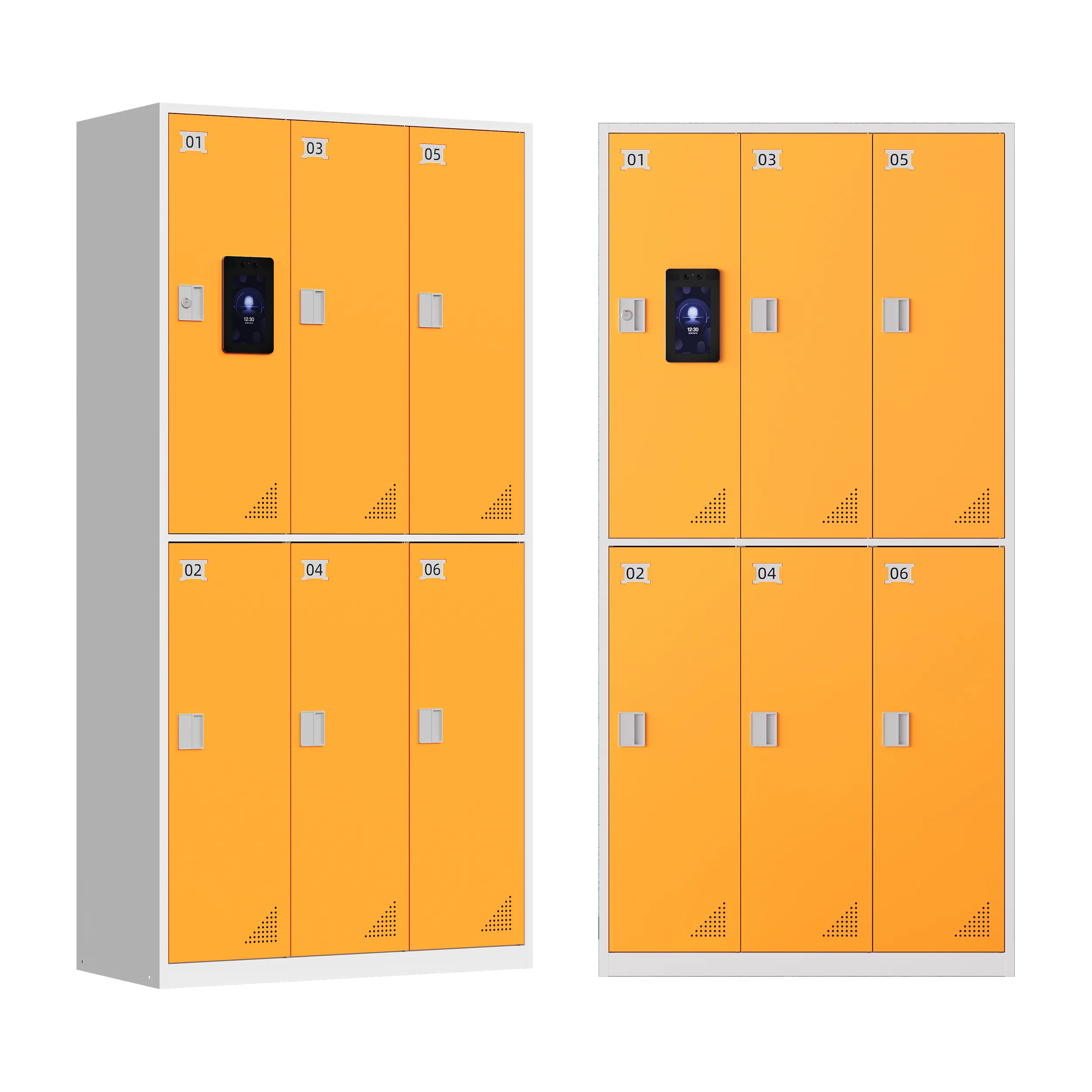
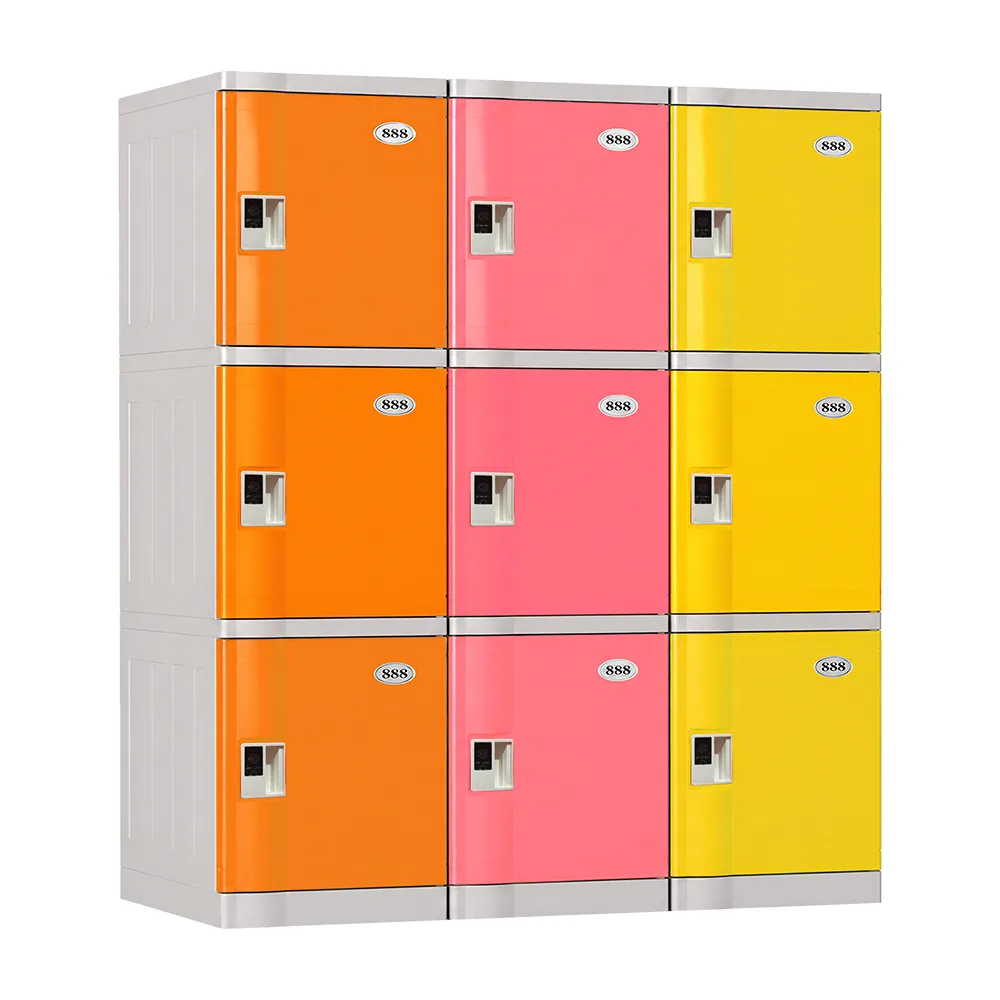
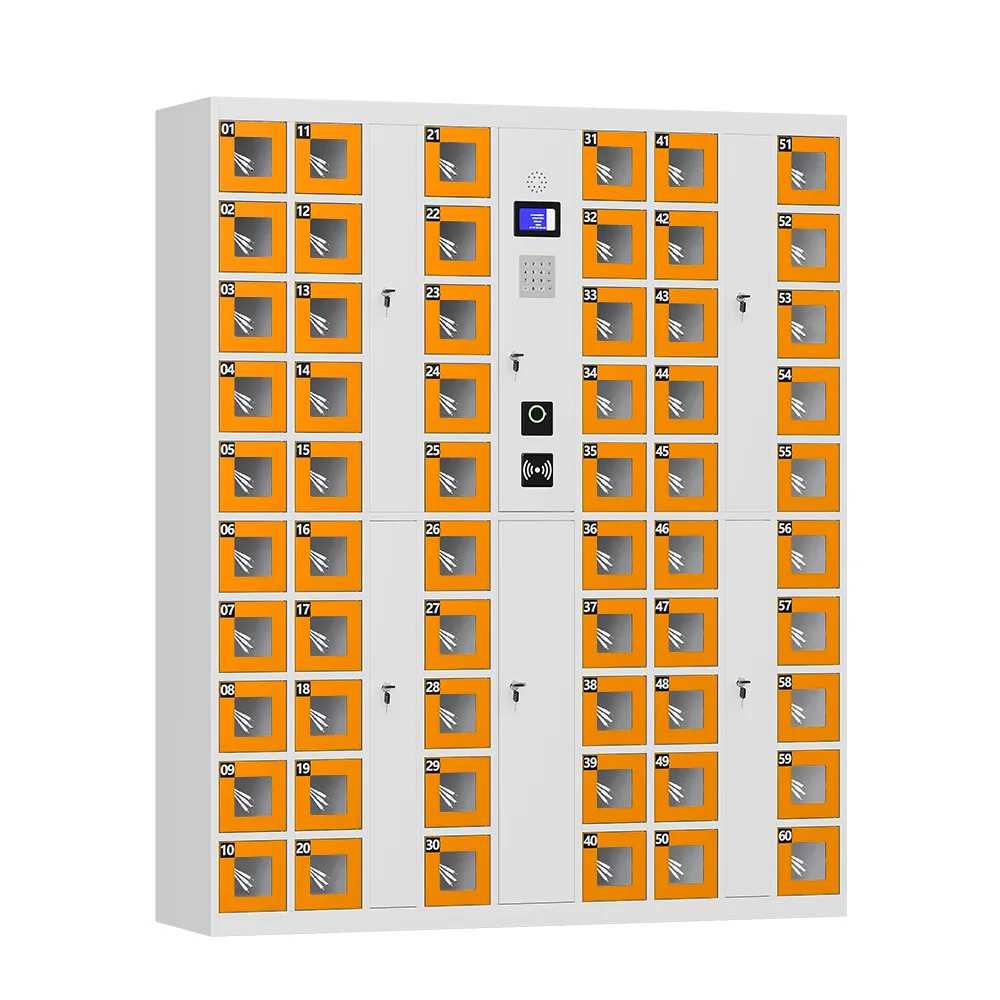
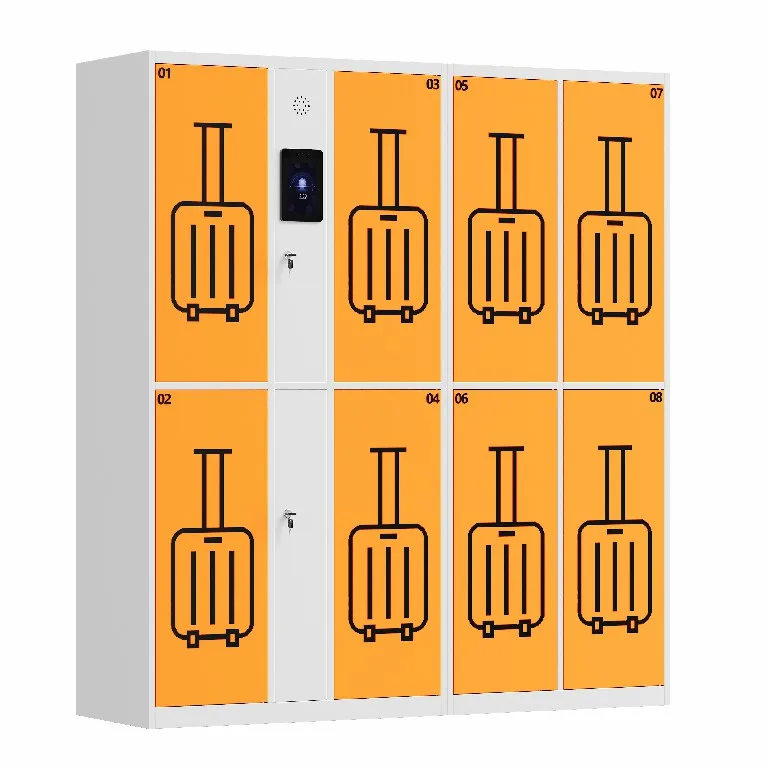
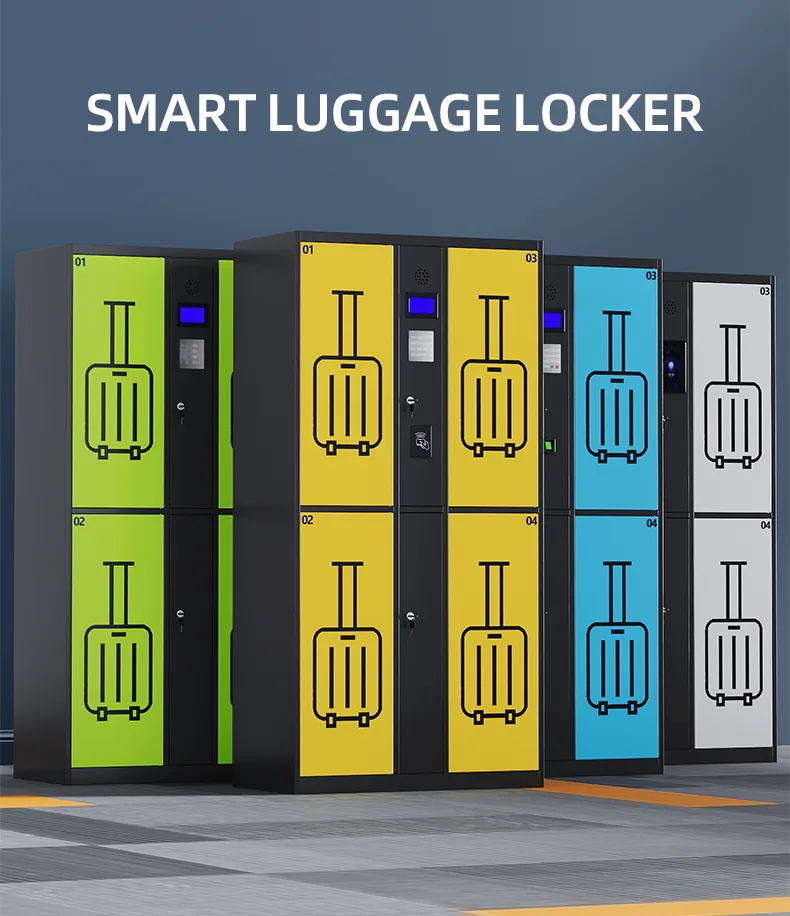
A smart luggage storage locker is a digitally connected, self-service storage bank with individually locked compartments in multiple sizes, an integrated touchscreen terminal and cloud-based management software. Unlike traditional staffed luggage counters, the entire storage and retrieval process is automated: users find available lockers via a mobile app or web platform, scan a QR code or enter a PIN to open a compartment, store their bags and retrieve them at any time — all without any staff interaction.
The system supports compartments in three standard sizes — small for backpacks and handbags, medium for carry-on suitcases and large for checked luggage and oversized items. High-quality units are built from cold-rolled steel with anti-corrosion powder coating, and outdoor-rated models include weather sealing, rain canopies and reinforced construction for year-round exposure. The intelligence behind the locker — real-time availability tracking, integrated payment, remote monitoring and data analytics — is what transforms a metal cabinet into a profitable, scalable luggage storage business.
Why Traditional Luggage Storage Is Falling Short
The conventional luggage storage model — a manned counter with fixed hours and limited locations — was designed for a world where travel followed predictable schedules. That world no longer exists. Today’s reality creates persistent friction for both travellers and operators:
- Limited operating hours — travellers arriving early in the morning or late at night have nowhere to store luggage, forcing them to drag bags around for hours
- Scarce locations — staffed counters exist only at major stations and airports, leaving museums, shopping districts, beaches and neighbourhoods underserved
- Long queues — at peak times (weekends, holidays, cruise ship arrivals), travellers wait 20–30 minutes just to drop off a bag
- High labor costs — staffing a counter for 12+ hours a day requires multiple shifts, making it expensive to operate in low-volume locations
- Inconsistent pricing — rates vary by location and operator, creating confusion and distrust among travellers
- Security concerns — bags stored behind a counter are handled by multiple staff members, with limited tracking and higher risk of damage or loss
- No advance booking — travellers cannot reserve a locker ahead of time, arriving at a location only to find no space available
- Language barriers — in tourist areas, communication between travellers and counter staff often causes delays and errors
Smart luggage storage lockers eliminate every one of these failure points by replacing manned counters with automated, always-available locker banks that can be deployed in any location with power and network access.
Seven Core Features of Smart Luggage Storage Lockers
1. Multi-Size Compartments for Every Bag Type
A quality luggage locker bank offers a mix of compartment sizes — small for backpacks and handbags, medium for carry-on luggage and large for checked suitcases and oversized items. The system automatically assigns the smallest compartment that fits the user’s luggage, maximising space utilisation and revenue per square metre. Some systems also offer extra-wide or extra-tall compartments for sports equipment, musical instruments or strollers.
2. 24/7 Self-Service Access
Travellers can store and retrieve luggage at any hour — before an early flight, after a late arrival, on weekends and holidays. No staff presence is required, no opening hours to check, no need to coordinate with a counter. This is particularly valuable for red-eye travellers, cruise ship passengers with early embarkation or late disembarkation, and anyone with a few hours between check-out and departure.
3. Contactless QR Code and PIN Access
The entire process is contactless. Users scan a QR code from their phone or enter a numeric PIN at the touchscreen to open their compartment. No shared keys, no signature pads, no physical interaction with staff — reducing hygiene risks while speeding up both drop-off and pickup. The system generates a unique access code for each transaction, ensuring only the authorised user can open the compartment.
4. Real-Time Availability and Reservation
Users can check real-time locker availability and reserve a compartment in advance via a mobile app, web platform or third-party booking integration. This eliminates the frustration of arriving at a location only to find no space. The system updates availability instantly when a locker is opened or closed, and can send alerts when a location is near capacity, allowing operators to deploy additional units or redirect users.
5. Integrated Payment System
A built-in payment terminal supports credit/debit cards, contactless payments (NFC), QR code payment and mobile wallets. Users select their locker size, pay by the hour or day, and receive a digital receipt — all at the touchscreen or via the app. The system supports dynamic pricing (peak/off-peak rates, seasonal pricing, membership discounts) and can integrate with popular payment gateways for seamless settlement.
6. Cloud-Based Remote Management and Analytics
Operators can monitor every locker in real time from a web-based dashboard — checking occupancy rates, viewing transaction history, remotely unlocking compartments for troubleshooting, receiving alerts for malfunctions or forced-entry attempts, and generating revenue reports. For multi-location operators, a single dashboard provides oversight across all sites, enabling data-driven decisions about pricing, expansion and resource allocation.
7. Durable, Weather-Resistant Construction
Luggage lockers are often deployed in high-traffic public areas — train stations, sidewalks, mall entrances — where they face heavy use, occasional abuse and exposure to the elements. Quality units use 1.0–1.5mm cold-rolled steel with anti-corrosion powder coating, reinforced doors, concealed hinges and tamper-resistant fasteners. Outdoor-rated models add weather sealing, rain canopies and UV-resistant finishes to withstand rain, snow and direct sunlight year-round.
How Self-Service Luggage Storage Works: Step-by-Step
The user journey is designed to be intuitive and fast — a first-time user should be able to complete a drop-off in under two minutes without any assistance. Here is the complete process:
- Find and reserve — Users search for nearby lockers via a mobile app, web platform or on-screen map, view real-time availability by compartment size, and optionally reserve a locker for a specific time window. Navigation guides them to the location.
- Drop-off — At the locker, users scan the QR code on the screen or enter their booking code. The system assigns the smallest suitable compartment, the door unlocks automatically, and the user places their luggage inside and closes the door. Payment is processed instantly.
- Enjoy hands-free — The luggage is securely locked in an individual compartment. The user receives a confirmation with their pickup code and can explore the city, attend a meeting or continue their journey without dragging bags.
- Pickup — When ready to retrieve, users return to the locker, scan their QR code or enter their pickup code, and the correct compartment door unlocks automatically. They retrieve their luggage, close the door, and the system immediately marks the compartment as available for the next user.
The entire cycle — from arrival to compartment reset — typically takes less than two minutes of active user operation, with the system handling authentication, allocation, payment, notification and logging automatically.
Value-Added Service: Luggage Delivery from Locker to Destination
Beyond basic storage, advanced smart luggage locker systems support an integrated luggage delivery service — users can store their bags at a locker and have them professionally delivered to their hotel, residence, airport or next destination. This transforms the locker from a simple storage point into a full-service logistics hub.
The delivery process works as follows:
- Select delivery — At the locker screen or in the app, the user chooses the ‘luggage delivery’ option instead of standard storage
- Enter details — The user provides the delivery address, recipient contact information and luggage details (quantity, size, weight)
- Store and label — The user places luggage in the assigned compartment; the system generates a shipping label and tracking number
- Courier pickup — A partnered courier collects the luggage from the locker at a scheduled time, with secure chain-of-custody logging
- Track and receive — The user can track the delivery status in real time via the app and receives confirmation upon delivery
This service is particularly valuable for: travellers with early hotel check-in or late check-out, cruise passengers needing bags delivered to the port, business travellers moving between meetings, and tourists who want to explore a city luggage-free before heading to the airport. For operators, delivery commands a premium price and increases revenue per transaction beyond basic storage fees.
Where Smart Luggage Storage Lockers Work Best
Luggage lockers are highly versatile and can be deployed in any location with reliable power, network connectivity and sufficient foot traffic. The table below outlines the primary deployment scenarios and their specific requirements:
| Deployment Scenario | Key Requirements | Typical Configuration |
| Train & Metro Stations | High volume, mixed bag sizes, 24/7 access, outdoor-rated | Large banks (40–100+ compartments), mixed S/M/L, near entrances |
| Airports | Extremely high volume, oversized luggage, security compliance | Extra-large banks (80–200 compartments), secure zone placement, airport system integration |
| Bus & Coach Terminals | Peak arrival/departure waves, short storage duration | Medium-to-large banks (30–80 compartments), near ticket counters |
| Tourist Attractions & Museums | Day-trippers, small-to-medium bags, peak seasonal demand | Medium banks (20–60 compartments), outdoor-rated, multilingual interface |
| Shopping Malls & Districts | Shoppers with purchases, medium bags, business-hours peak | Medium banks (20–50 compartments), near entrances or parking |
| Hotels & Hostels | Guests before check-in / after check-out, concierge integration | Small-to-medium banks (12–40 compartments), lobby placement, hotel app integration |
| Beaches, Parks & Stadiums | Seasonal demand, outdoor exposure, event peaks | Outdoor-rated, medium banks (20–60 compartments), mobile/portable options |
Benefits for Operators, Property Owners and Travellers
For Luggage Storage Operators and Franchisees
- 24/7 revenue generation — lockers earn money around the clock without staffing costs
- Low operating costs — no counter staff, no rent for a dedicated office, minimal maintenance
- Scalable business — add locations and locker banks as demand grows, managed from one dashboard
- Data-driven decisions — occupancy rates, peak times and revenue per location inform expansion and pricing
- Premium services — luggage delivery, insurance and memberships increase revenue per transaction
- Reduced liability — automated access logs and secure compartments reduce loss and dispute claims
For Property Owners and Location Partners
- New revenue stream — earn rental income or revenue share from underutilised space (lobbies, corners, corridors)
- Improved foot traffic — travellers seeking lockers discover and visit adjacent shops, cafes and attractions
- Enhanced visitor experience — a valued amenity that improves satisfaction and encourages longer stays
- No operational burden — the locker operator handles installation, maintenance and customer support
- Space-efficient — a 12-compartment locker bank occupies less than 2 square metres of floor space
For Travellers and Users
- Hands-free exploration — store bags and enjoy the city, museum or shopping without luggage
- 24/7 access on your schedule — no rushing to meet counter closing times
- Secure storage — locked, monitored compartments with access logs, not a pile behind a counter
- Contactless convenience — scan, store, go — no interaction with staff required
- Advance booking — reserve ahead and guarantee space, even during peak season
- Luggage delivery option — have bags sent directly to your hotel or airport, eliminating a return trip
Revenue Models for Luggage Locker Operators
Smart luggage storage lockers offer multiple revenue streams, which can be combined to maximise return on investment:
- Hourly/daily storage fees — the core revenue source, priced by compartment size and duration (e.g., small $2/hour, medium $3/hour, large $4/hour, or $8–15/day)
- Luggage delivery service — premium fee for door-to-door delivery from locker to hotel/airport, typically $15–40 depending on distance and bag count
- Membership subscriptions — monthly or annual plans for frequent travellers, offering discounted rates and priority access
- Peak and dynamic pricing — higher rates during holidays, cruise ship days and major events; lower rates to stimulate off-peak demand
- Advertising revenue — integrated display screens or locker door branding for local tourism boards, hotels and attractions
- Insurance add-ons — optional luggage insurance at the point of booking, generating commission per transaction
- Partner commissions — revenue share with property owners, hotels and tourism boards that refer users to the locker network
The most successful operators combine storage fees with at least one premium service (delivery or insurance) and dynamic pricing, achieving revenue per compartment of $3–8 per day in high-traffic locations. At that rate, a 40-compartment locker bank can generate $3,000–8,000 per month in gross revenue.
Key Considerations When Choosing a Luggage Locker System
Use this ten-point checklist when evaluating suppliers and comparing specifications:
- Cabinet material and build quality — Confirm cold-rolled steel construction (1.0–1.5mm) with anti-corrosion powder coating; check door reinforcement, hinge quality and tamper-resistant fasteners
- Compartment size mix — Ensure the configuration includes small, medium and large compartments to handle actual luggage profiles; verify extra-large options for oversized items
- Access methods — Verify support for QR codes, PIN codes and optional RFID; avoid systems locked into a single authentication method
- Payment integration — Confirm built-in payment terminal support for cards, NFC and QR payments; check which payment gateways and currencies are supported
- Management software — Evaluate the cloud dashboard for real-time monitoring, remote unlock, transaction logs, revenue reporting and multi-location management
- Reservation and booking — Check whether the system supports advance reservations, waitlists and integration with third-party booking platforms
- Luggage delivery capability — If you plan to offer delivery, confirm the software supports shipping label generation, courier integration and real-time tracking
- Outdoor protection — For outdoor deployments, confirm IP rating, operating temperature range, UV resistance and availability of rain canopies and lightboxes
- Customisation and OEM/ODM — Check whether compartment count, door layout, colours, branding, screen interface and software can be customised to your brand
- Support and after-sales — Evaluate warranty terms, technical support response times, spare parts availability and whether the supplier offers installation guidance and training
Implementation Best Practices
A successful luggage locker deployment depends as much on location selection and operational planning as on the hardware itself. Follow these best practices to avoid common pitfalls:
- Conduct a foot-traffic and demand audit before ordering — observe traveller volume, bag sizes and peak times at each candidate location for 1–2 weeks
- Size for peak demand, not average — add a 30–50% buffer for seasonal spikes (holidays, cruise season, major events) and future growth
- Choose visible, accessible locations — near station entrances, mall exits, tourist information points or hotel lobbies; avoid hidden corridors or back rooms
- Ensure adequate power and network connectivity at the site before delivery — outdoor units may need trenching for power and data cables, or cellular connectivity
- Pilot with one high-traffic location first — gather usage data, pricing feedback and operational learnings before expanding to a network
- Set competitive but profitable pricing — research local alternatives (hotel luggage storage, staffed counters) and price slightly below for basic storage, with premiums for delivery and large compartments
- Provide clear multilingual signage — a simple step-by-step guide near the locker helps first-time users complete the process without assistance
- Integrate with local tourism channels — partner with hotels, hostels, tour operators and tourism boards to promote your locker locations to travellers
- Establish a maintenance schedule — regular cleaning, software updates and hardware inspections ensure long-term reliability and user satisfaction
- Monitor and optimise continuously — use dashboard data to adjust pricing, add capacity at high-demand locations and reallocate underperforming units
Frequently Asked Questions
How is a smart luggage locker different from a traditional staffed luggage counter?
A traditional counter requires staff to accept, tag, store and retrieve bags manually, with fixed operating hours and limited locations. A smart locker is fully automated — users scan, store and retrieve their own bags at any time, with no staff required. This enables 24/7 operation, lower costs and deployment in many more locations than staffed counters can economically serve.
Can users reserve a locker in advance?
Yes. Quality systems support advance reservation via a mobile app or web platform. Users can check real-time availability, select their compartment size and time window, and pay in advance. This guarantees space even during peak periods and allows travellers to plan their day with confidence.
What happens if a user forgets their pickup code?
The system typically sends the pickup code via SMS, email and app notification, so users have multiple references. If all are lost, the user can verify their identity at the touchscreen (via the phone number or email used for booking) to receive a new code. Operators can also remotely unlock a compartment after verifying the user’s identity through customer support.
How secure are the lockers against theft or tampering?
Quality units feature reinforced steel construction, anti-pry doors, concealed hinges and tamper-resistant fasteners. Each access event is logged with timestamp and user identifier, and the system can send alerts for forced-entry attempts or door-left-open anomalies. For high-risk locations, optional CCTV integration and alarm systems provide additional security.
Can the lockers operate outdoors in rain or extreme temperatures?
Outdoor-rated models are specifically designed for exterior deployment. They feature weather-sealed electronics, corrosion-resistant powder coating, UV-resistant finishes and optional rain canopies. Always confirm the IP rating and operating temperature range with your supplier — indoor units will fail quickly when exposed to the elements.
How much revenue can a luggage locker generate?
Revenue depends on location, foot traffic and pricing. In high-traffic locations (major train stations, city centres, popular tourist areas), a compartment can generate $3–8 per day. A 40-compartment bank at $5 average per compartment per day generates approximately $6,000 per month in gross revenue. Lower-traffic locations may generate $1–3 per compartment per day. Operators should model revenue based on actual local foot traffic and competitor pricing before investing.
Can I brand the lockers with my own logo and colours?
Yes. Most manufacturers offer OEM/ODM customisation including custom colours, logo printing on doors and frames, branded touchscreen interfaces and custom software white-labelling. This is particularly valuable for franchise networks, tourism brands and property operators who want the lockers to match their visual identity.
Conclusion: From Luggage Burden to Business Opportunity
Smart luggage storage lockers have evolved from a niche convenience at major train stations into a scalable, data-driven business that can be deployed in virtually any high-traffic location. The value is not just in the steel cabinet — it is in the complete system: real-time availability tracking, contactless access, integrated payment, cloud-based remote management, optional luggage delivery and actionable analytics. Together, these elements transform underutilised space into a 24/7 revenue stream while solving a real and persistent problem for travellers.
For operators, the result is a low-labor, scalable business with multiple revenue streams. For property owners, it is passive income and improved visitor experience. For travellers, it is the freedom to explore a city hands-free, on their own schedule. As global travel and urban mobility continue to grow, smart luggage storage lockers are no longer an optional amenity — they are essential infrastructure for modern cities and a compelling business opportunity for operators and investors.
Get a Custom Luggage Locker Configuration for Your Location
Contact our smart locker specialists for a free site assessment and custom configuration based on your location, foot traffic, luggage volume and branding requirements. We offer factory-direct pricing, OEM/ODM customisation (compartment count, colours, logo, software interface), outdoor-rated steel construction, cloud management software with payment integration, optional luggage delivery module and global shipping with installation guidance. Reach out via WhatsApp or email to request a product catalog and project quotation.